 Our top pick
Exuma Powerboat Tour from Nassau with Swimming Pigs
BeerBottled waterSnacks
From$439 /person
See dates and book Free cancellation up to 24 hours before
See the original swimming pigs in one big day. Step onto a fast powerboat in Nassau, cross the Exuma Cays with iguanas, nurse sharks and a hot island lunch included, and let the boat do the 80-mile journey so you can make Pig Beach and be back at the marina by late afternoon.
“Perfect and worth every penny. Lots of island time, unlimited food and drinks. The crew was accommodating, professional and so entertaining. Best tour we did in Bahamas, highly recommend.”
All three are full-day powerboat runs from Nassau, about eight hours end to end, that pair Big Major Cay with iguana and nurse shark stops and include lunch in the middle cays.
Our top pick


book early in your trip, weather can scrub a crossing
Most reviewers call the full-day Exuma swimming pigs trip from Nassau worth the money and say the crew made the day.
Several reviewers say the unlimited food and drinks on the boat day surprised them most.
A few travelers wish the weather had cooperated, since rough seas can cancel the crossing on short notice.
check-in desk at margaritaville, ferry terminal
Choose the first calm-weather day of your trip. The open-water crossing depends on wind, so an early booking gives the operator room to move you if the sea turns rough.
Compare the full-day tours, all running about 8 hours, and check what each includes. Look at the lunch arrangements, the included drinks, and whether the landing fees are already covered.
Check-in happens 30 to 45 minutes before departure, with desks at the entrance to the Margaritaville Restaurant at the Paradise Island Ferry Terminal. An 8:30 am departure calls check-in at 8 am.
Boats return to the Nassau docks between 4:30 pm and 5 pm. If you are on a cruise, check that your ship leaves well into the evening before you commit.
Set out swimwear, a towel, sunscreen, a hat, and sunglasses, and pack anything you want to keep dry in a roll-top dry bag. If you get seasick, take your medication 30 to 60 minutes before departure.
View the Bahamian Rock Iguanas at Allen's Cay in the Exuma Cays.
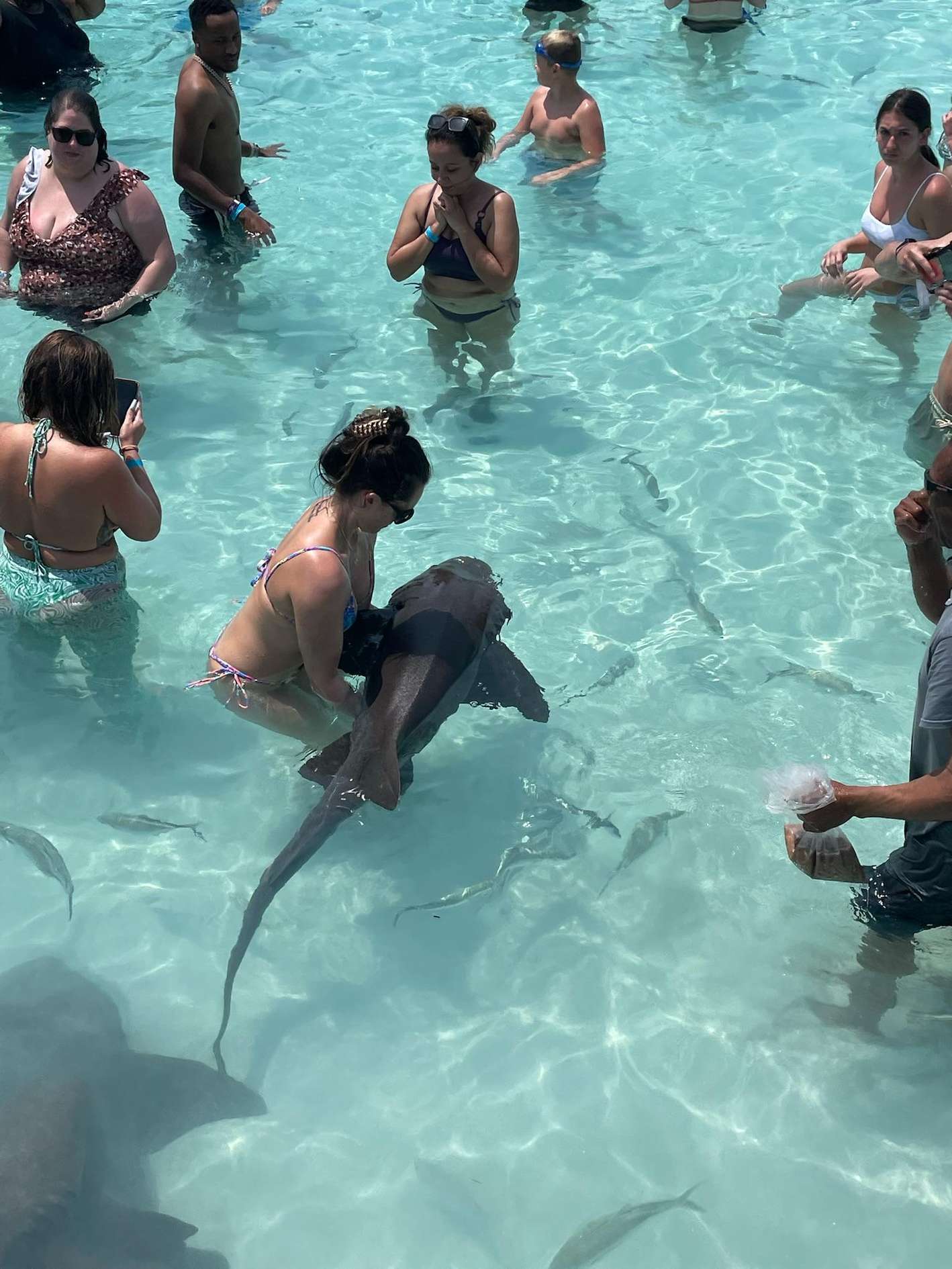
View the Nurse Sharks from the Dock as they swim around you and take close up photos.
Visit the Swimming Pigs at Big Major Cay.
Stop for a delicious lunch at the Staniel Cay Yacht Club or Black Point Lorraine's Cafe
Relax on a stunning Sandbar (tide dependent) or beach in the Exuma Cays.
View the Sunken Drug plane near norman's Cay
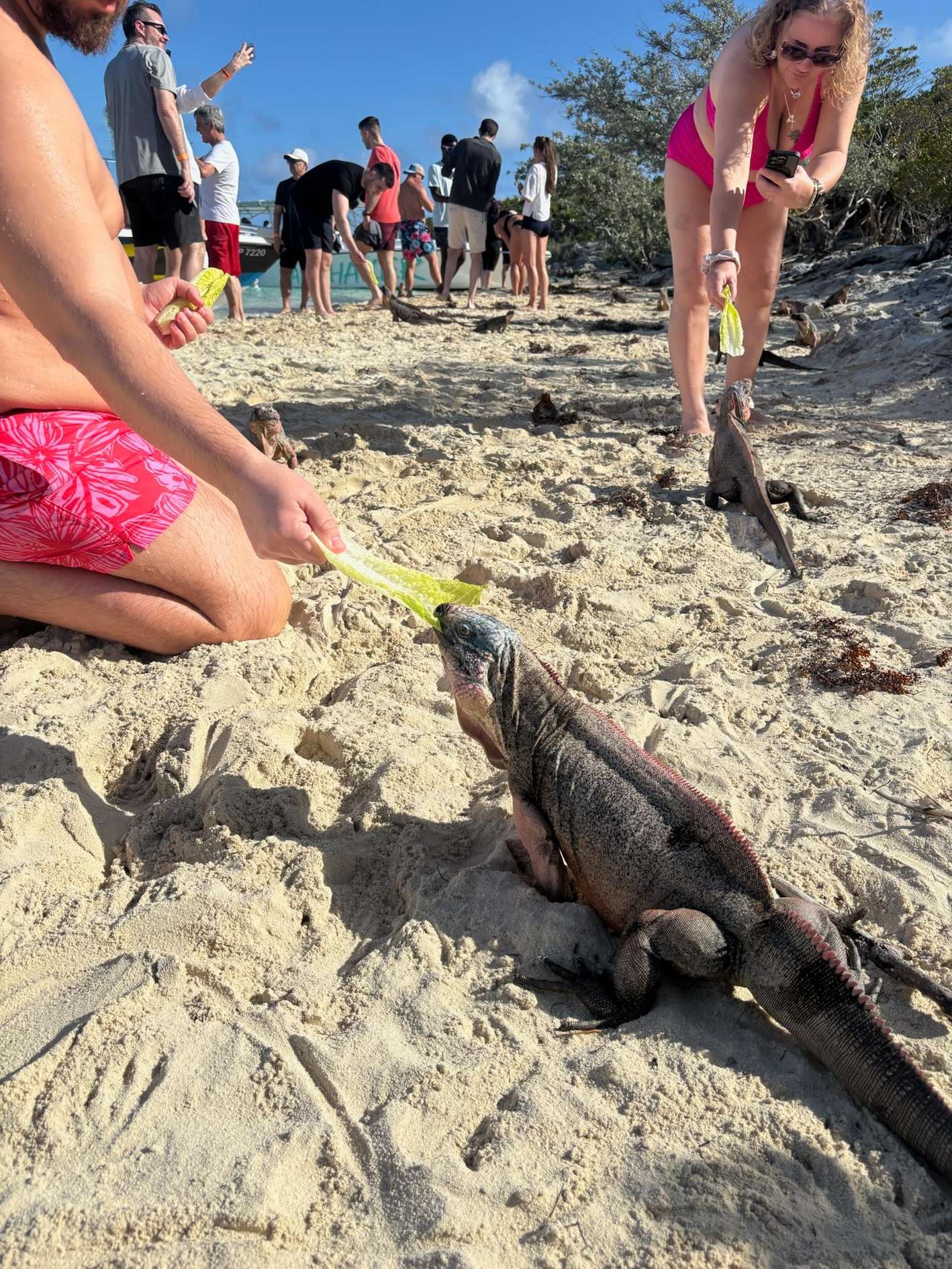
Step onto Allen’s Cay to meet the rare Bahamian rock iguanas, prehistoric-looking reptiles that can live over 40 years and exist naturally only in The Bahamas, roaming freely without predators and…
View the legendary wreck of Pablo Escobar’s sunken plane, a crashed 1980s smuggling aircraft that now rests in just a few feet of water, transformed into a hauntingly beautiful artificial reef.
At Compass Cay, wade into calm lagoons with famously docile nurse sharks, bottom-dwellers that rely on suction feeding and are known for their surprisingly gentle temperament.
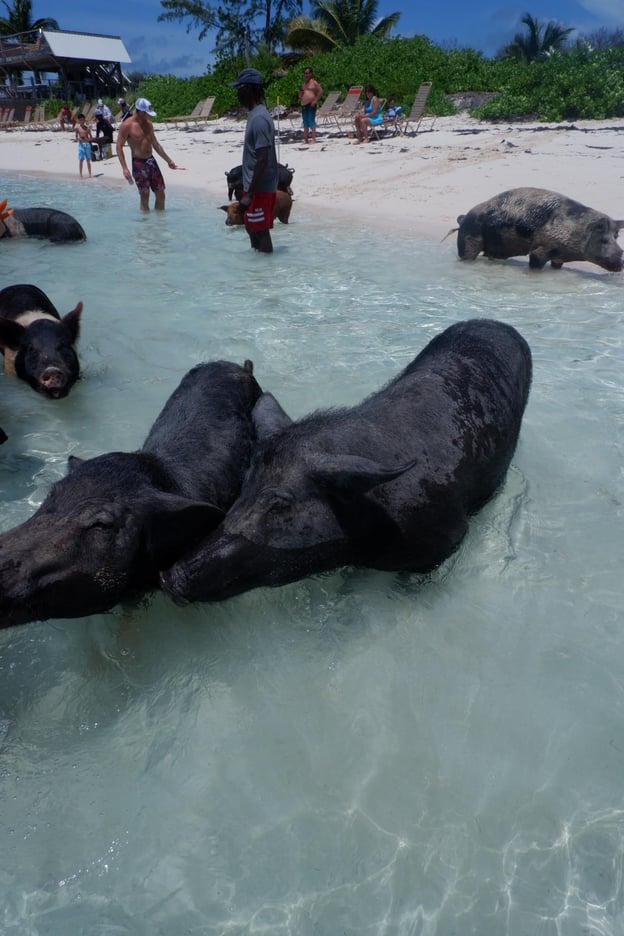
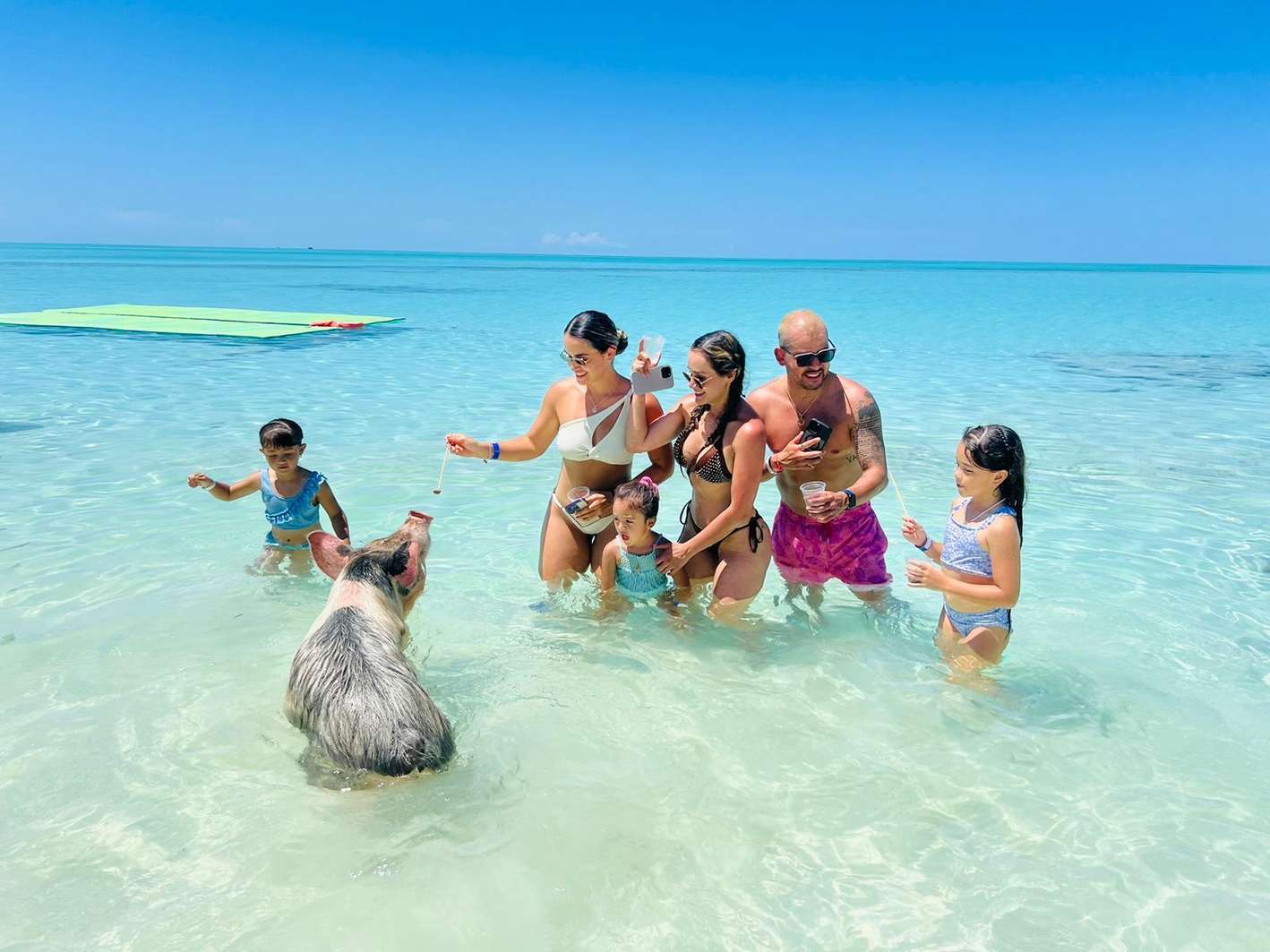
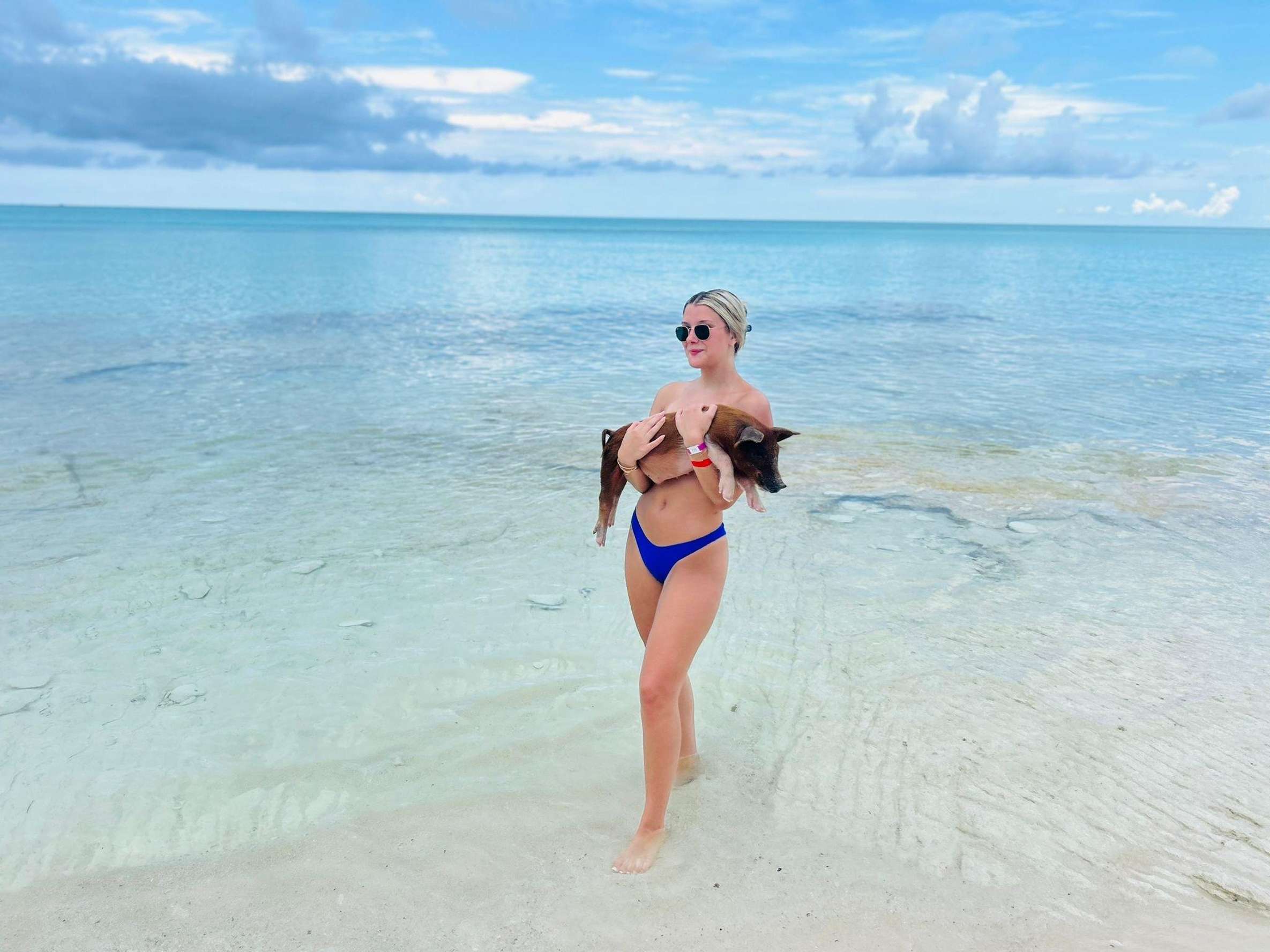
Make waves at Big Major Cay, where the iconic swimming pigs paddle out to greet boats; local lore says they were left by sailors years ago, though their true origin remains a mystery.
Open-water powerboat crossings to the Exuma swimming pigs have health limits: pregnant travelers are not permitted, and travelers with back problems, heart conditions, or seasickness are advised against the ride.
Check each tour's restrictions before you book, since rules differ by operator and tour. If you are pregnant, choose a different Bahamas excursion for this trip, and tell the operator about any back or heart condition when you reserve so they can advise you before departure.
calm seas run may through september
Big Major Cay sits in the northern Exuma Cays, an uninhabited island near Staniel Cay with no hotels, no docks and no road. The original wild herd lives there, and nothing but open Exuma Sound lies between it and Nassau.
No passenger ferry, hydrofoil or water taxi makes the run. Water taxis in the Exumas only hop between neighbouring cays, and no scheduled boat sails to Pig Beach. Two ways across remain: a high-speed powerboat tour or your own private charter, both covering the roughly 80 nautical miles.
The crossing itself eats about four hours of the day, two hours out and two hours back, which is why the whole trip runs eight hours or more. Smaller managed pig encounters sit closer to Nassau, but the original feral herd is the one worth the crossing.
Two hours out, two hours back, and the rest of the daylight spent in the cays. Plan the day around that math and it stops feeling like a gamble.
The day starts on land, at a check-in desk. Check-in happens 30 to 45 minutes before departure at the Paradise Island Ferry Terminal, with the desks at the entrance to the Margaritaville Restaurant.
Boats push off between 8:00 and 8:30 am and run until about 5 pm, a stretch of eight to eight and a half hours all told.
Desks sit at the entrance to the Margaritaville Restaurant
Roughly two hours south to the cays
Iguanas, sandbars and other stops before the pigs
Groups get 20 to 45 minutes with the pigs
A restaurant stop is built into the day
Back in time for evening plans
Timing matters more than it sounds. The pigs swim out hungriest before 11 am, when they are alert and eager to greet arriving boats.
By afternoon, fed all morning by earlier tours, they lie in the shade and watch the boats come in. A morning arrival means pigs paddling out to meet you; by midday they nap while you photograph them.
The Exuma Powerboat Tour from Nassau with Swimming Pigs runs this shape in eight hours, with lunch, beer and bottled water included. Book a tour that puts Big Major Cay in the morning slot and the day pays you back.
The crossing is the part people underestimate. In calm conditions the run south takes about an hour to an hour and a half at full cruising speed, sitting on spray-slicked water with the white sand flashing back the sun from below.
When the wind builds, the same stretch turns into steep, short chop that pounds the hull and slows everything down.
Captains watch one number: sustained wind. Above roughly 20 knots, the open route builds chop of three to five feet, and that is the point where crossings get cancelled and moved to another day. Operators reschedule when it happens, and a moved date still gets you to the pigs.
June provides flat, calm seas, though summer squalls can occasionally cause localized rough water.
Tap a month to read it.
October experiences lower calm-water shares and higher wind frequency, increasing the risk of cancellations.
Tap a month to read it.
October experiences lower calm-water shares and higher wind frequency, increasing the risk of cancellations.
Tap a month to read it.
Most of the year runs flat. Waves stay under one and a half metres on nine days in ten or better all year, and May through September is the calm stretch, with barely a windy day a month. Late autumn and winter bring the front-driven blowy spells, which is when cancellations cluster.
The spray is constant, so treat the boat like a wet zone.
A heavy roll-top dry bag keeps cameras, phones and dry clothes safe, a floating pouch on a lanyard keeps electronics from sinking if they go overboard, and a long-sleeve rash guard, broad-brim hat and strong mineral sunscreen handle sun that reflects off shallow water all day.
Prepare for wind as well as sun and the crossing becomes the fun part.
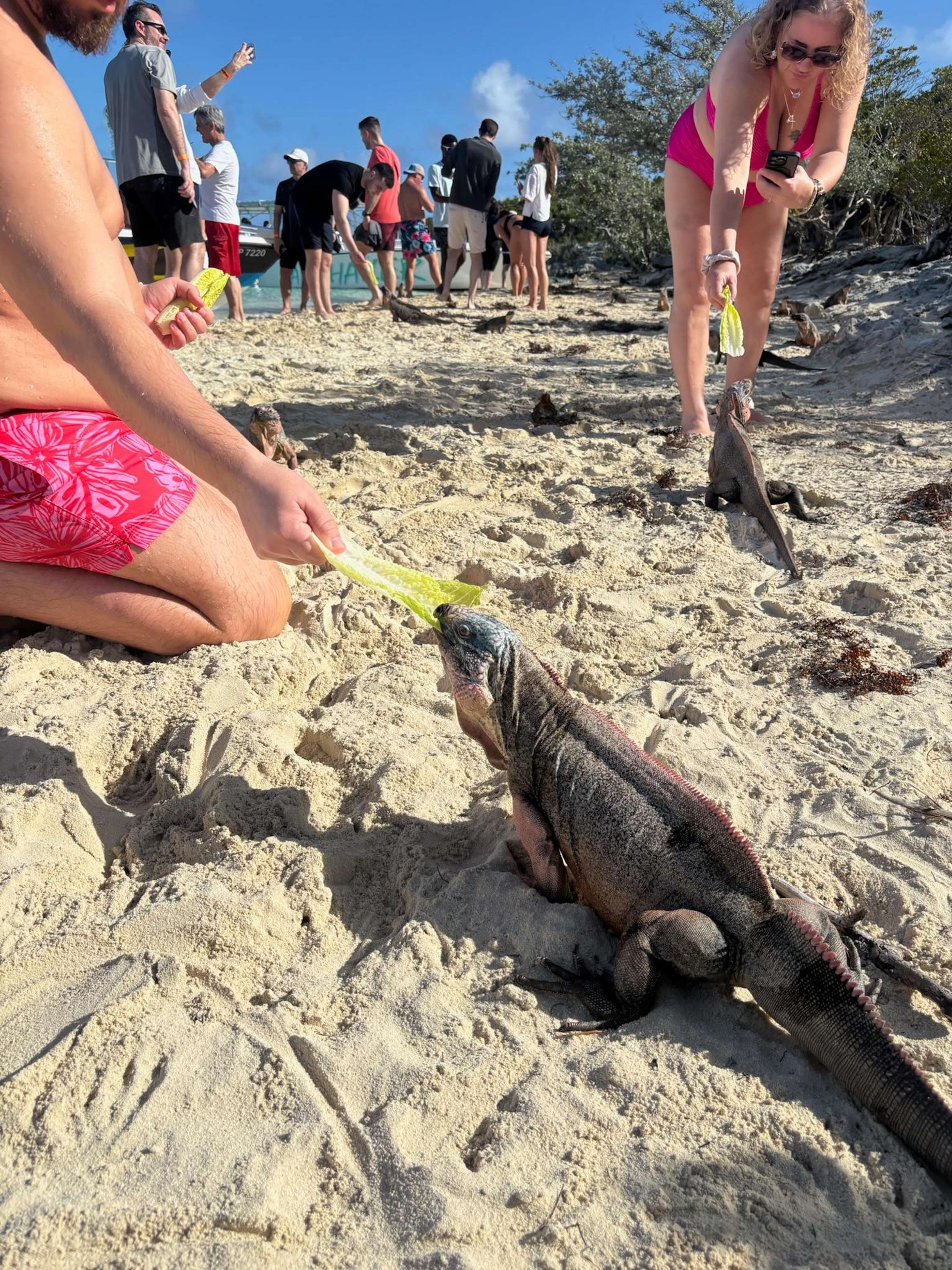
A full-day tour stitches several stops around the pig visit, and each has its own rules.
Nurse sharks gather at Compass Cay Marina, where a crew briefing comes before anyone touches water: no grabbing, no chasing, no sudden movements, and children kept within arm's reach. The crew feeds the sharks themselves, so keep your hands out of the water entirely.
Bahamian rock iguanas wait on their own cays, and the law here is firm. Touching, chasing or hand-feeding these protected animals counts as an offense under Bahamian wildlife law, so look, photograph, and let them forage as they do.
Thunderball Grotto, when the itinerary includes it, opens up at low tide, when swimmers can enter with their heads above water. At high tide the entrance sits underwater and the currents strengthen, so the tide decides the visit. Some tours also pass sunken plane wreckage and sandbars on the way.
Wear water shoes with real grip. Exuma cays mix sandy beach with exposed limestone, sharp coral and barnacled rock, and barefoot landings end in cuts.
Bring some US dollars in cash for dock fees and tips. Some tours bundle the Compass Cay landing fee into the ticket, others collect it on the dock, and the card machine there does not always connect.
The Nassau: Exuma Cays Swimming Pigs and Iguanas Tour folds the Allen's Cay iguanas, the Compass Cay sharks and Pig Beach into one eight-hour day with a Bahamian lunch included.
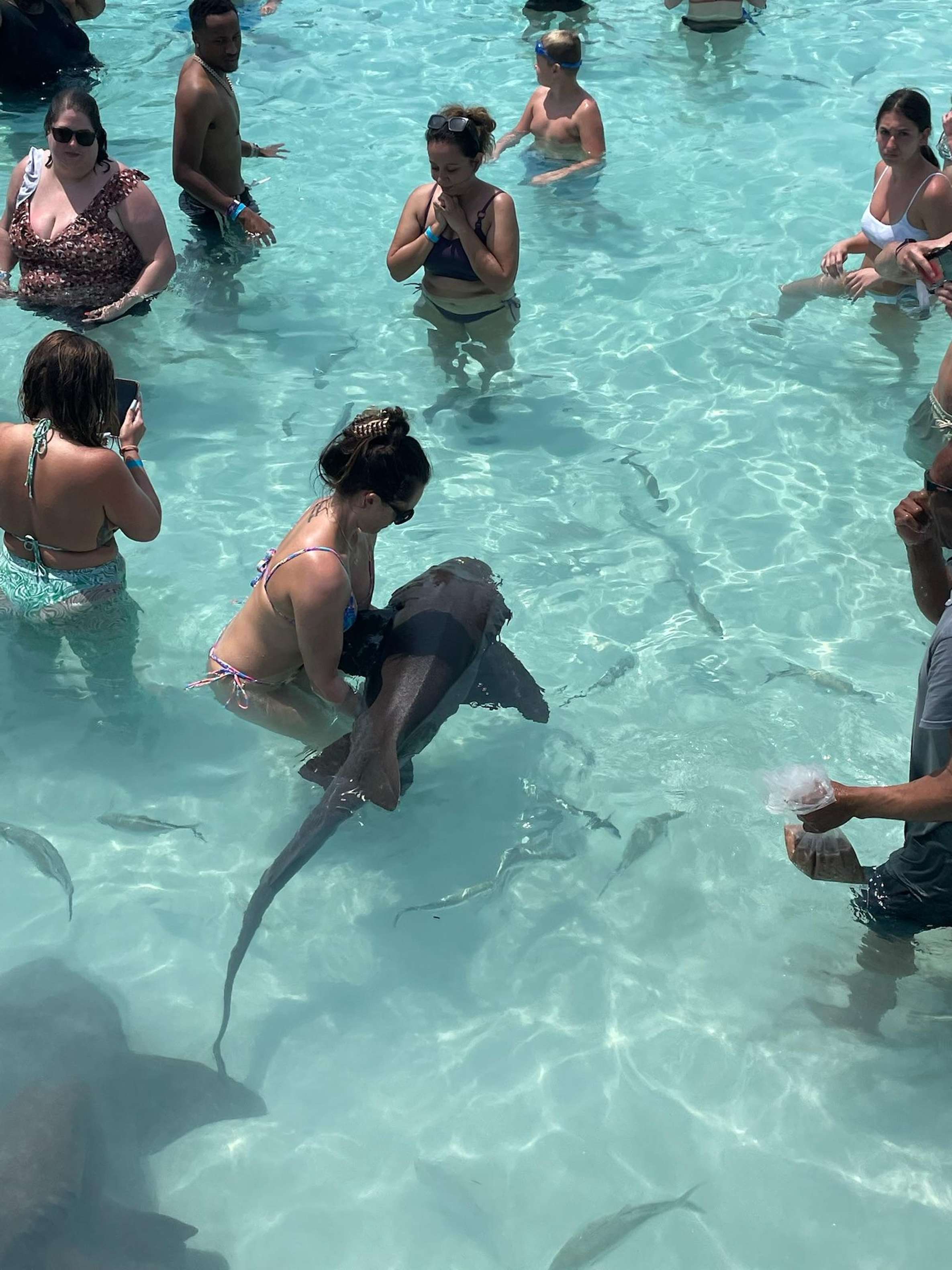
Big Major Cay has no restaurants, no shops and no facilities at all, so lunch happens at one of the small settled cays nearby.
Most full-day tours build in a hot sit-down meal, either at a local Exuma restaurant or at the yacht club on Staniel Cay, which sits right between the grotto and Pig Beach.
What lands on the plate is Exuma cooking. Menus lean on whatever the boats brought in: conch, grouper, snapper and, in season, spiny lobster. The standard plate comes with peas n' rice, fried plantains and coleslaw, and it tastes better after four hours of salt air than any meal has a right to.
One tour on this route stops at a quiet cay and grills on the spot instead, laying out fish, steaks, salads and tropical fruit platters under the trees. Either way, the lunch stop is built into the day, so you carry nothing but an appetite and maybe a snack for the boat ride between stops.
Check what your ticket includes before you pack food. The group tours here list lunch among their inclusions, which means one less thing to think about on a day that already starts before 8 am.
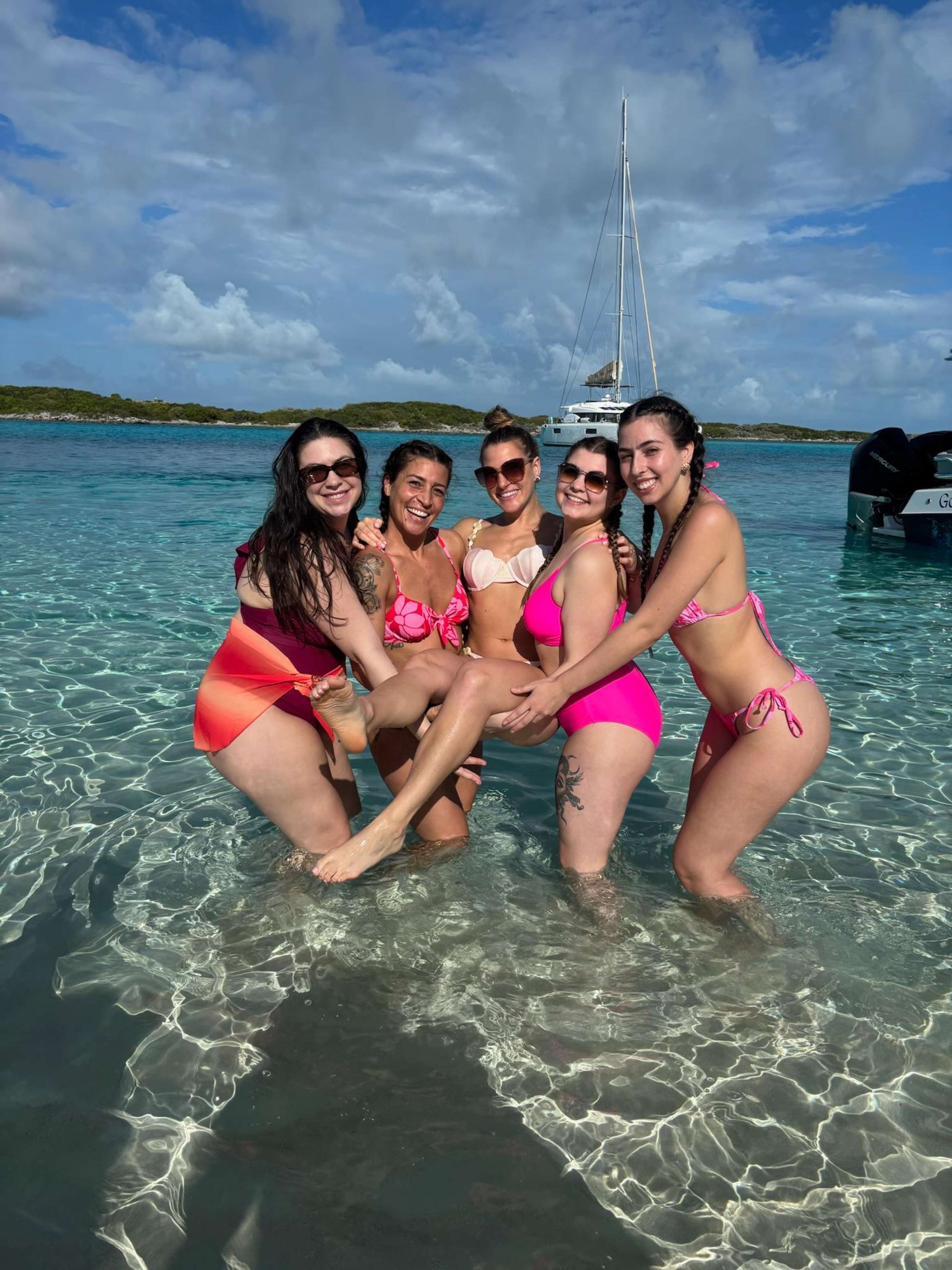
This is an honest boat day, and it asks things of your body. There are no docks at Pig Beach: you come ashore by boat steps or a ladder, step down into the ocean, and walk through shallow water and uneven sand.
A moderate level of fitness covers it, but anyone with limited mobility should read the fine print first. Operators draw clear lines. Pregnant travelers are not permitted, and the crossing is not recommended for people with spinal injuries, back problems or poor cardiovascular health.
At least one tour also rules out babies under one, wheelchair users, non-swimmers and anyone prone to seasickness. Minimum ages are not standardized across the Bahamas, so each operator sets its own. Small children can come, with conditions.
Some tours let infants and toddlers ride in a stroller or on an adult's lap, and families with kids aged five or six manage fine if they pack extra snacks, hats and sun cover-ups. For motion sickness, act before it starts.
Take medication 30 to 60 minutes before departure, so it is working when the chop arrives. Sit low and near the middle or back of the boat, face forward, and keep your eyes on the horizon instead of a phone.
The late-afternoon return leg is often the roughest, so do the same on the way home.
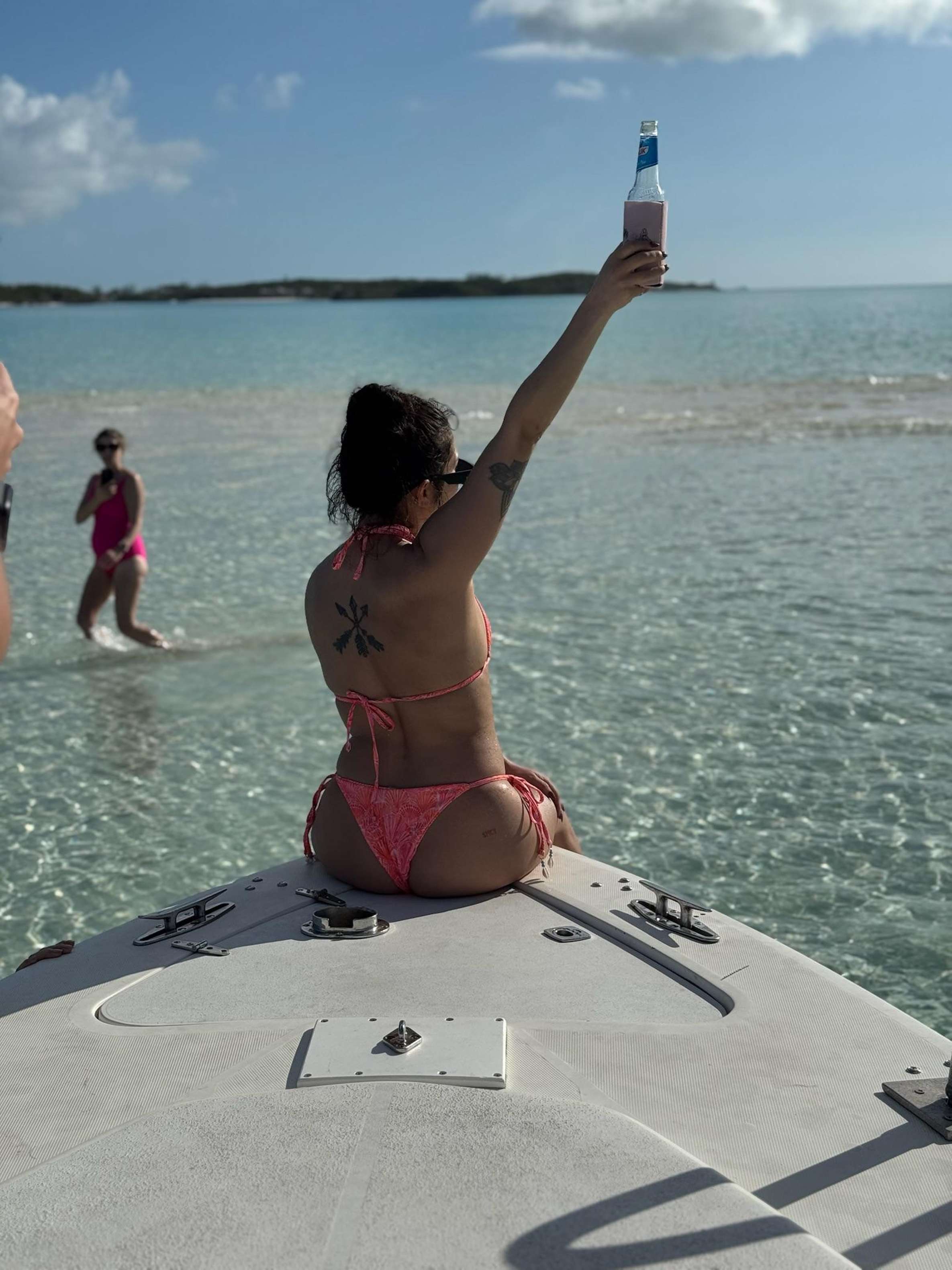
Nobody knows for certain how pigs came to live on an empty cay. Sailors may have left them planning to come back and cook them, or survivors may have swum ashore from a wreck.
The account locals tell is that residents of a nearby island moved them here in the 1990s, and two Exuma men, Wade Nixon and Don Rolle, said they brought the first pigs over to start a farm.
Whatever the origin, the herd is looked after now. Caretakers and tour operators bring fresh water and food daily, volunteers keep three 150-gallon drums filled in the centre of the island, and a Nassau veterinarian treats sick pigs in separate pens.
On the beach, the pigs run the show, and a few rules keep it pleasant. Feed from an open, flat hand or in the water, never scattered at your feet.
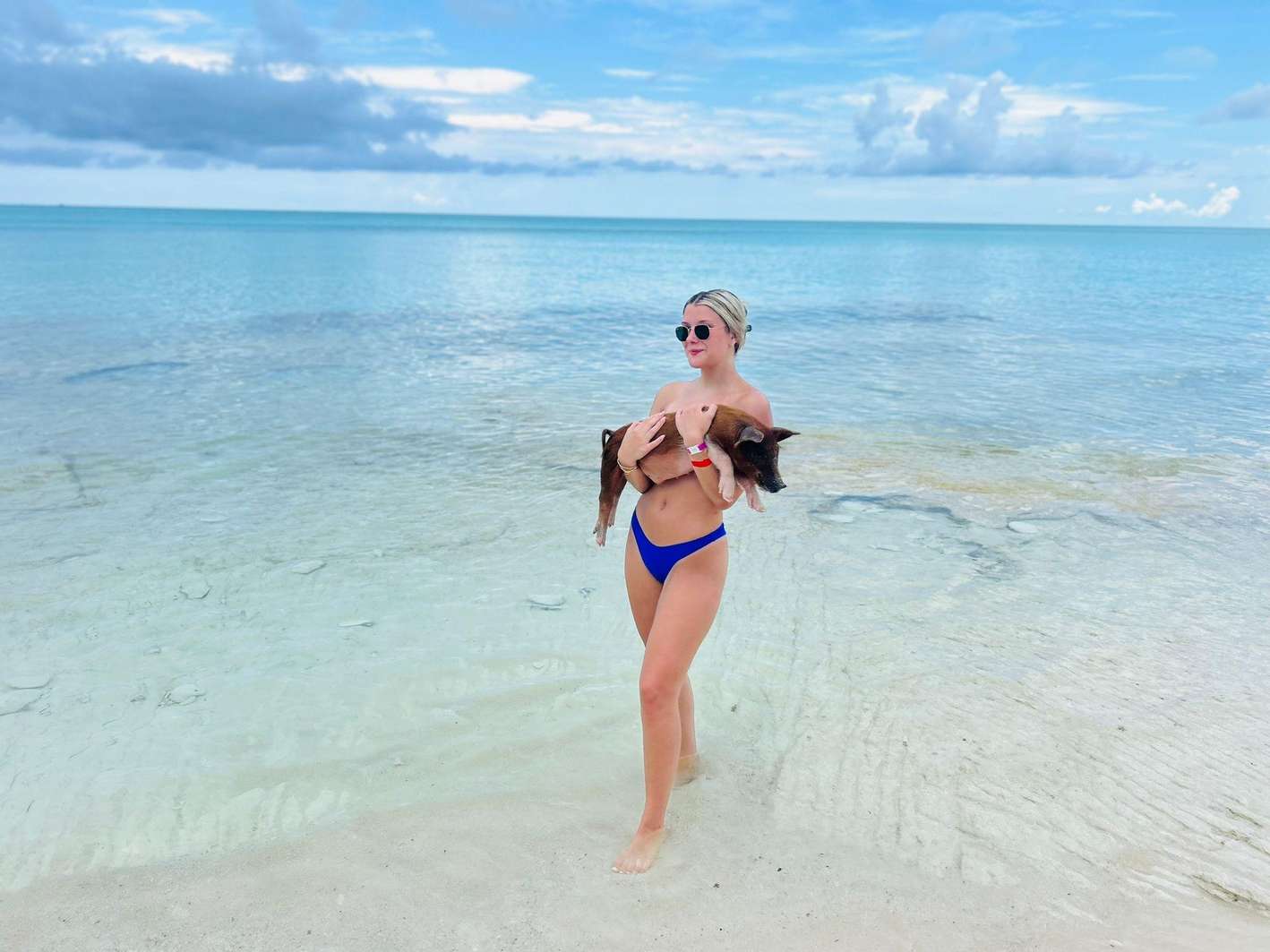
With empty hands, raise them high so the pigs read them as empty and walk away. Never corner a resting pig, never tease one with food, and never pick up a piglet, because a squealing piglet brings an angry sow at speed.
The shallows are shared water. Pigs do their business in the shorebreak, so avoid swallowing water or submerging your face near the beach, and stay out entirely if you have fresh cuts.
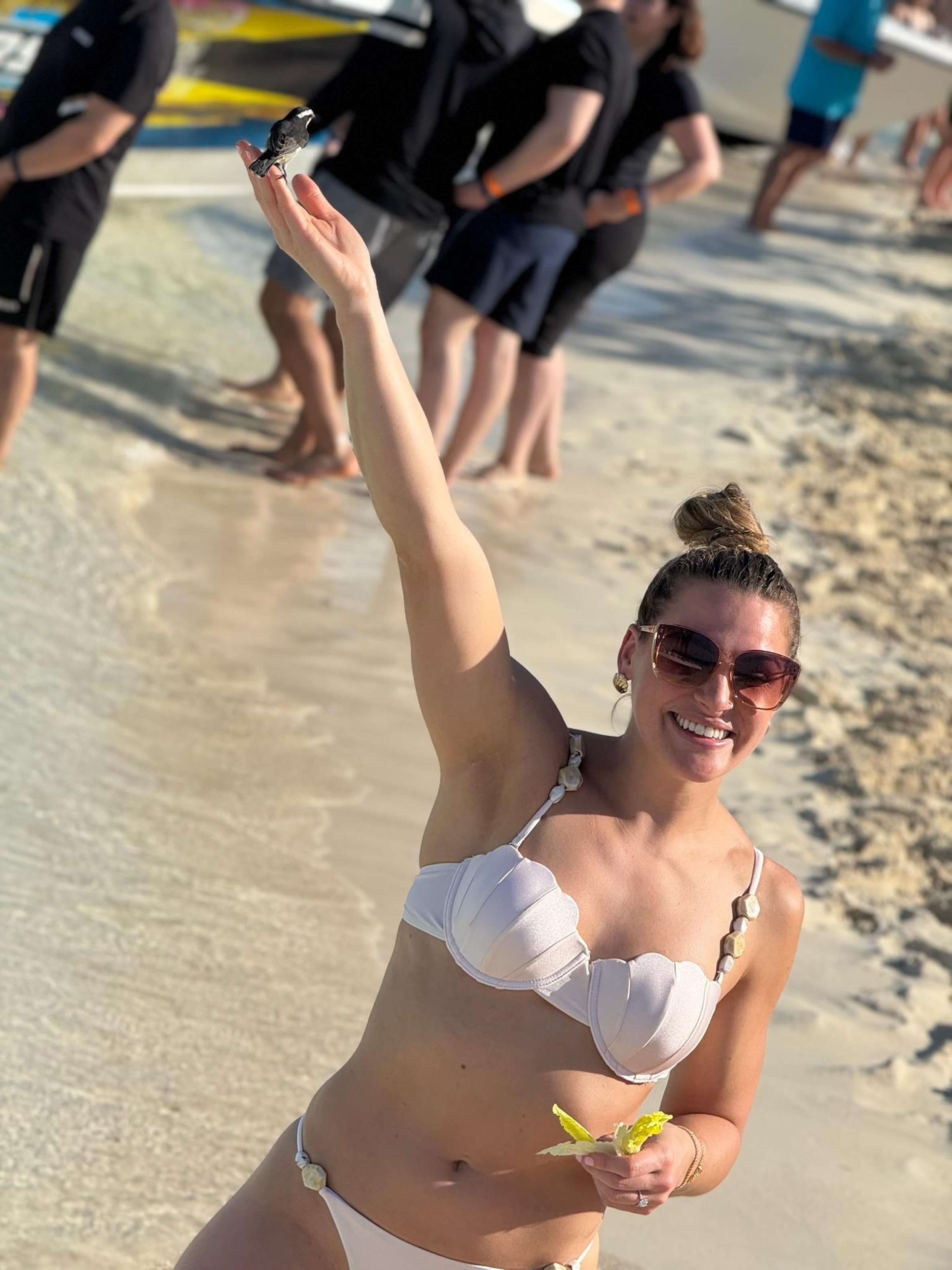
Wind, more than anything else, decides this trip. When sustained winds climb past about 20 knots and the Sound builds steep chop, captains cancel the crossing and move it to another day. Some choppy days are simply part of the calendar, more from October through December than in the flat summer.
If the weather scrubs your day, the outcome is usually painless. Operators reschedule the excursion or refund it when conditions force a cancellation, and one operator refunds automatically at 100 percent. Your money comes back; the booking date is what needs protecting.
| If this happens | What happens then |
|---|---|
| Winds build a small craft advisory | The captain cancels or reschedules the crossing |
| A weather cancellation is confirmed | You get your money back |
| You booked the first day of your stay | A scrubbed day still has room to move |
| You booked the last day of your stay | A scrubbed day has nowhere to go |
That last row is why veterans give the same advice: book the crossing for your first free day. A tour early in the trip gives the weather several chances to cooperate; a final-day booking gives it one.
Demand does the rest. High-speed powerboat day trips sell out months ahead in the peak seasons, so once the dates are chosen, book early. The Exuma Full Day Swimming Pigs Group Boat Tour carries the same eight-hour shape with snacks, lunch and landing fees included.
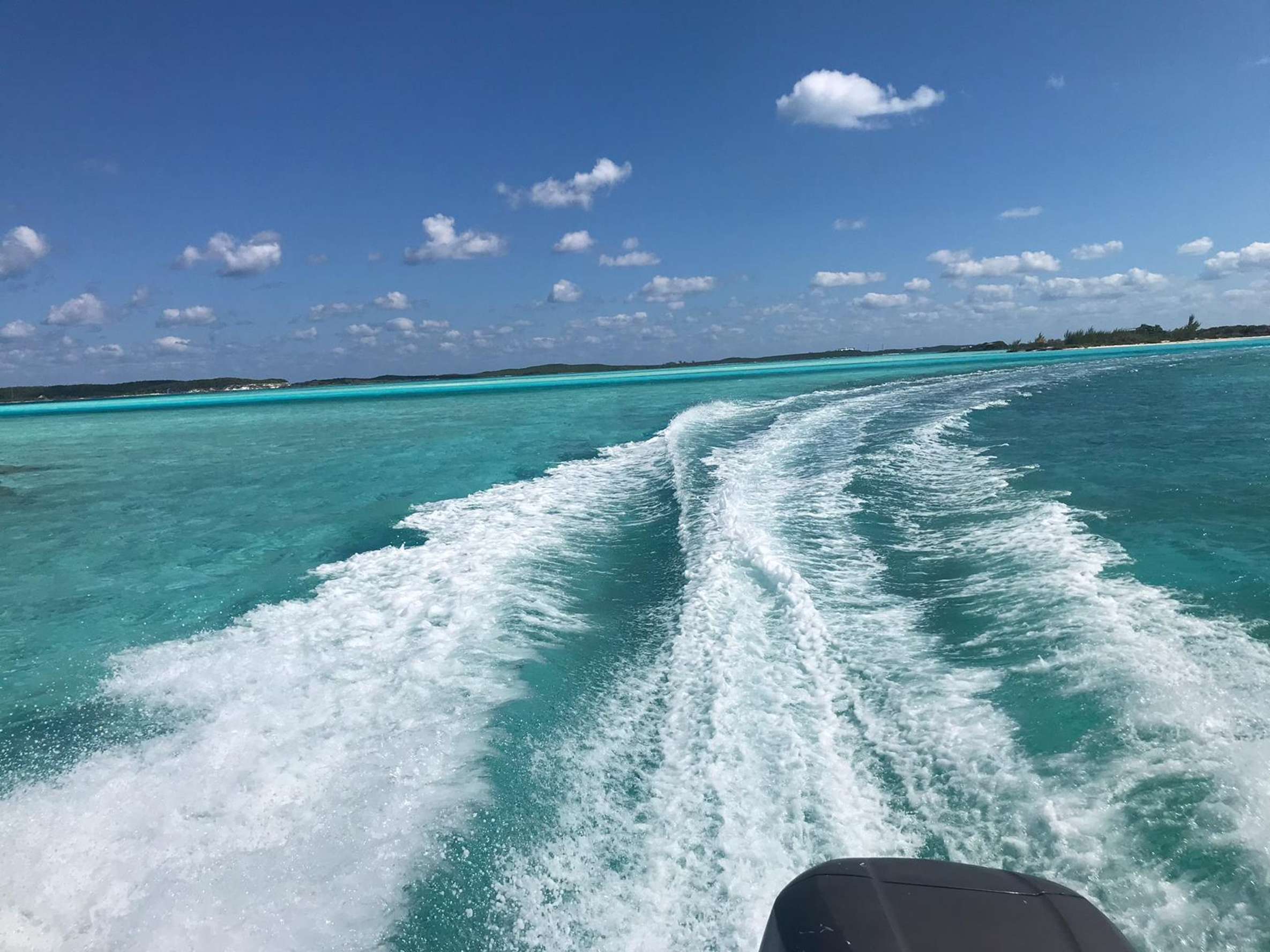
The return runs on a clock, and the clock is what cruise passengers need to read first. Check-in falls between 7:30 and 8 am at the marina, the boat leaves by 8:30, and the docks come back into view between 4:30 and 5 pm. That is the whole day accounted for.
For anyone sailing on a ship, that return window sets the rule: your all-aboard call needs to sit well into the evening for the math to work. A ship leaving at dinnertime does not leave enough margin for a delayed crossing. Resort guests have it easier; the evening is still mostly theirs.
Required check-in before boarding
Boats depart south for Exuma
Boats dock back at Nassau
Back on land by five, there is still a Nassau evening to spend. Downtown is walkable, with side streets, galleries and shops running off Bay Street. Arawak Cay, which everyone calls the Fish Fry, lines up brightly painted shacks serving Bahamian seafood after dark.
Marina Village on Paradise Island suits a slower stroll, with McKenzie's Conch Shack for dinner and a coffeehouse that turns into a cocktail lounge in the evening.
Standing on the dock at five with salt still on your skin, the day already feels complete. Anything after that is a bonus.
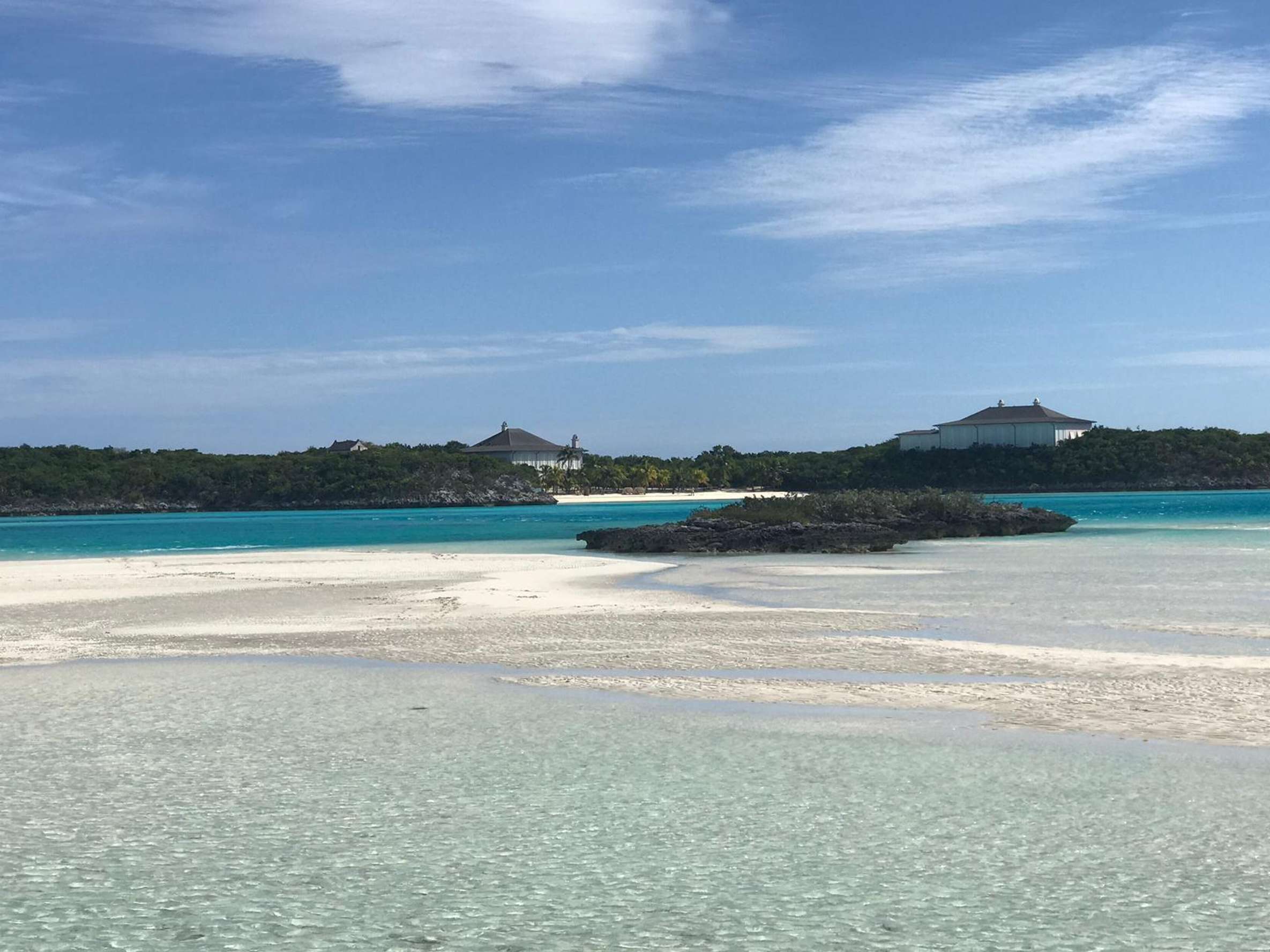
If the pig day leaves you hungry for more of either island, both have easy second acts.
Nassau keeps it simple. The Straw Market and the duty-free shops run along Bay Street downtown, and Paradise Island, connected by a bridge, carries the big resorts and aquarium attractions for an afternoon of air conditioning.
Great Exuma rewards a full extra day, though it takes a flight or a separate trip to reach.
George Town has a waterfront and its own straw market, and the water around it is the draw: the sandbars of Elizabeth Harbour shift with the tide, and the Moriah Harbour Cay National Park coastline gives you shallow, quiet water to explore by boat or on foot.
Stocking Island, just off George Town, packs the most into one visit. The George Town tourist office maps its hiking trails, the coves are worth a swim, and there is snorkeling around a mystery cave on the ocean side.
On Sunday afternoons, Chat 'N Chill on Stocking Island fires up a pig roast and feeds the stingrays that cruise the beach, which makes a decent epilogue to a pig-centric week.
None of this needs a booking made months out, so treat these as the flexible days around the one that does.
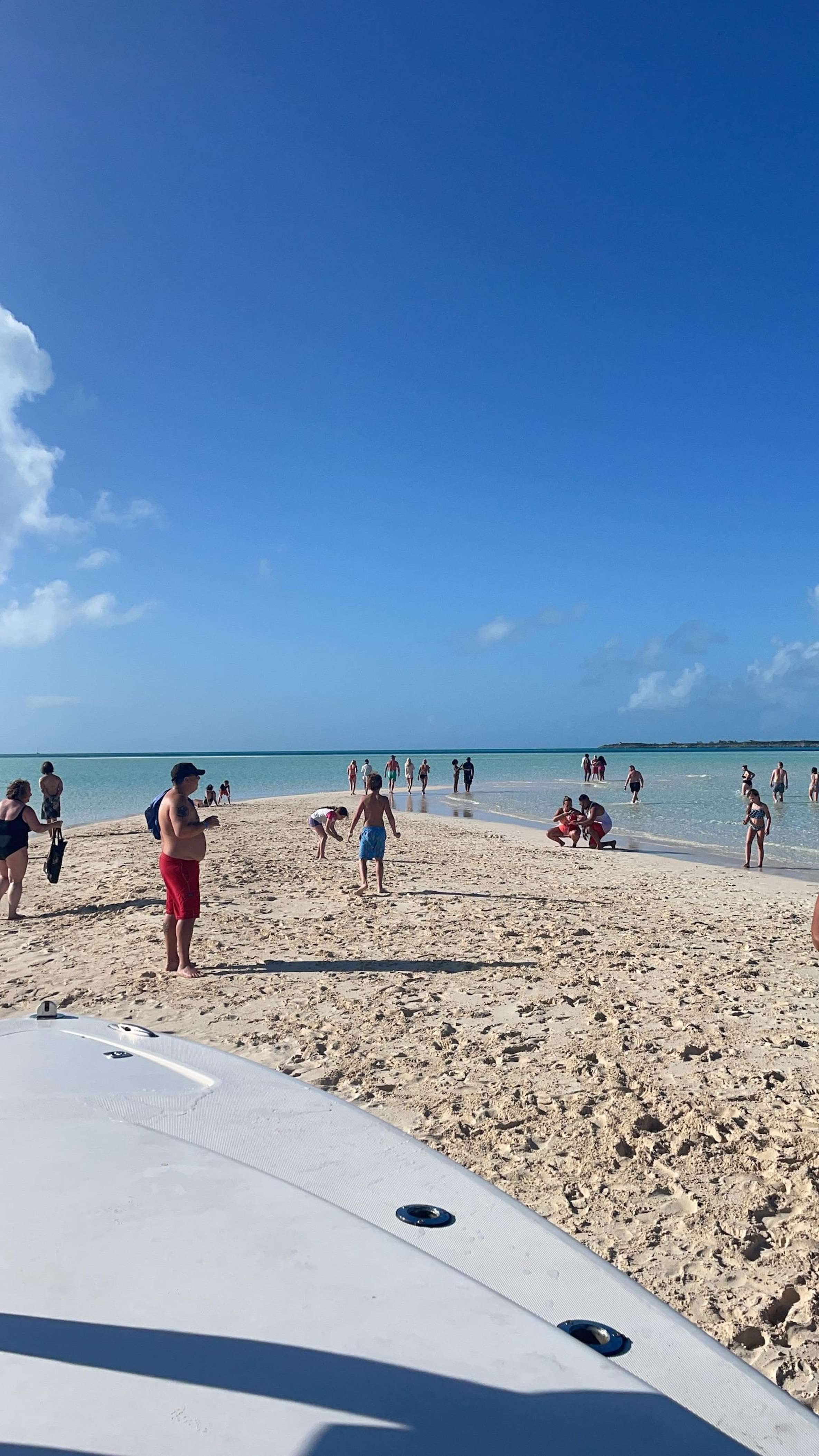
The honest comparison comes down to what the crossing itself is worth to you.
A chartered boat of your own can reach Big Major Cay, but renting your own small boat cannot: rental boats around Great Exuma are restricted to Elizabeth Harbour, well short of the pigs. So the choice sits between a group powerboat tour and flying.
A short flight from Nassau to Staniel Cay takes 30 to 40 minutes each way and skips the rough water entirely, at a far higher cost.
The powerboat costs much less in return for hours of open ocean; the two-hour figure is the direct run to Big Major Cay on a fast boat in decent conditions, while trips that work farther down the cays stretch to two to three hours each way.
| Check | Why it matters | Our pick |
|---|---|---|
| Your schedule | Why it matters | How the tours here do |
| Cruise with an early all-aboard call | A full-day tour leaves little margin for delay | Boats dock back by 5 pm, so only late-evening sailings work |
| Prone to seasickness | The open crossing is frequently bumpy and exposed | All tours here cross by powerboat; the flight alternative avoids it |
| Photographer or repeat Bahamas visitor | The original wild herd justifies the full day | Every tour here goes to Big Major Cay itself |
| Tight budget or half a day only | Half-day pig trips near Nassau cost less and take less time | These are eight-hour trips to the original herd |
For cruise passengers with tight port schedules, a half-day pig encounter near Nassau delivers similar interaction time with far less risk. For everyone else, the full day out to the original colony, sharks, iguanas and all, is the trip people talk about for years.
Take a full-day powerboat tour from Nassau if you have a flexible day early in your trip, a reasonable stomach and a wish to see the original wild herd. The crossing, the sharks, the iguanas and a hungry pig paddling out to meet the boat make the long day pay for itself.
Stay closer to port if your cruise sails early, you are pregnant, you have a back injury, or you travel with a baby under one.
Big Major Cay sits about 77 to 80 nautical miles southeast of Nassau across the open Exuma Sound. On a fast powerboat the crossing usually takes about two hours each way, depending on the sea.
Full-day powerboat excursions depart Nassau marinas between 8 am and 8:30 am, with check-in required between 7:30 am and 8 am. Boats return to the docks between 4:30 pm and 5 pm.
Tours leave from Bay Street Marina or the Paradise Island Ferry Terminal, so check which one your chosen operator uses and plan your morning around it.
The boats return to Nassau between 4:30 pm and 5 pm, so your ship needs a departure well into the evening for this day trip to work safely. On a tight port schedule it leaves little margin for delay.
Yes. Operators cancel the open-water run when sustained winds pass roughly 20 knots and the chop builds to 3 to 5 feet. If weather forces a cancellation, you get a refund or a rescheduled day.
Pregnant travelers are not permitted on the crossings, and people with back or spinal injuries, heart conditions, or a tendency to seasickness are advised against them. One tour also rules out babies under 1, non-swimmers, and wheelchair users. If a rule could stop you from boarding, confirm it before you book.
The crossing runs over open Atlantic water and is often bumpy and spray-filled. Take motion-sickness medication 30 to 60 minutes before departure, sit low toward the middle of the boat, face forward, and keep your eyes on the horizon.
Lunch is included on these tours, served at a restaurant in the cays such as one on Staniel Cay or Black Point. Expect Bahamian plates built around fresh seafood, with sides like peas n' rice and fried plantains.
Ocean spray and reflected sun off the white sand are constant, so pack SPF 50+ sunscreen, a broad-brim hat, and a long-sleeve rash guard. A roll-top dry bag keeps your phone and camera safe, and a floating pouch with a lanyard stops electronics sinking if they go overboard.
There is no dock, so you step down boat ladders into the water and wade through shallows onto uneven sand. You need steady legs and a moderate level of fitness to do it comfortably.
Follow the guides' feeding instructions: feed from an open hand or in the water, keep food out of sight when you have none, and never hold food while standing in the shallows. Don't pick up piglets, since their squeals bring protective mothers running, and give resting pigs room.
The half-day encounters near Nassau cost less and involve less travel. The full-day run is for travelers who want the original wild herd on Big Major Cay and the journey through the remote cays along the way.
pigs swim out hungriest before 11 am

the pigs swim out hungriest in the early morning
Eight hours across the Exuma Cays, pigs, iguanas, nurse sharks and a hot lunch included, with free cancellation up to 24 hours before departure.