


8 hours·German, English
4.9(11)
Great Exuma: Private Island-Hopping Boat Tour with Swimming Pigs
Free cancellation up to 24 hours beforeWiFi on boardRestroom on board

Book the boat and wade in with the famous swimming pigs of the Bahamas. Join hundreds of travelers who ride a powerboat from Nassau across the Exuma Cays to Big Major Cay, stopping at iguanas, nurse sharks, and a sunken plane along the way. Pick your day and go.
"Perfect and worth every dollar. Tons of island time, unlimited food and drinks. Crew was friendly, professional and fun. Best tour we did in the Bahamas!"


pigs hear engines, think food
About 20 pigs live wild on Big Major Cay, an uninhabited island in the Exumas that no road reaches. The trip takes a full day by boat, and how you feed, time and book it decides what the encounter delivers.
The original swimming pigs live on Big Major Cay in the Exuma Cays, an uninhabited island reachable only by boat, with about 20 pigs and piglets living wild.
Swimming with them mostly means wading in knee- to waist-deep water while pigs paddle out to your boat, since they associate engine noise with food.
You cannot walk or drive to them from any Great Exuma resort beach; the trip takes a powerboat from Nassau or Great Exuma or a flight to Staniel Cay.
Never stand in shallow water holding food in your open hand, because a 300-pound hungry pig will charge, knock you over or bite.
Book the excursion for the first day of your trip, since winds over about 20 knots force cancellations across the open crossing.
Book your day with the pigs for the first available morning of your trip, so the operator can move you to another day or refund you if the weather turns. If you have a spinal injury or back problems, are pregnant, or cannot manage boat steps and walking through shallow water onto an unliftable beach, choose a different tour or a flight to Staniel Cay.
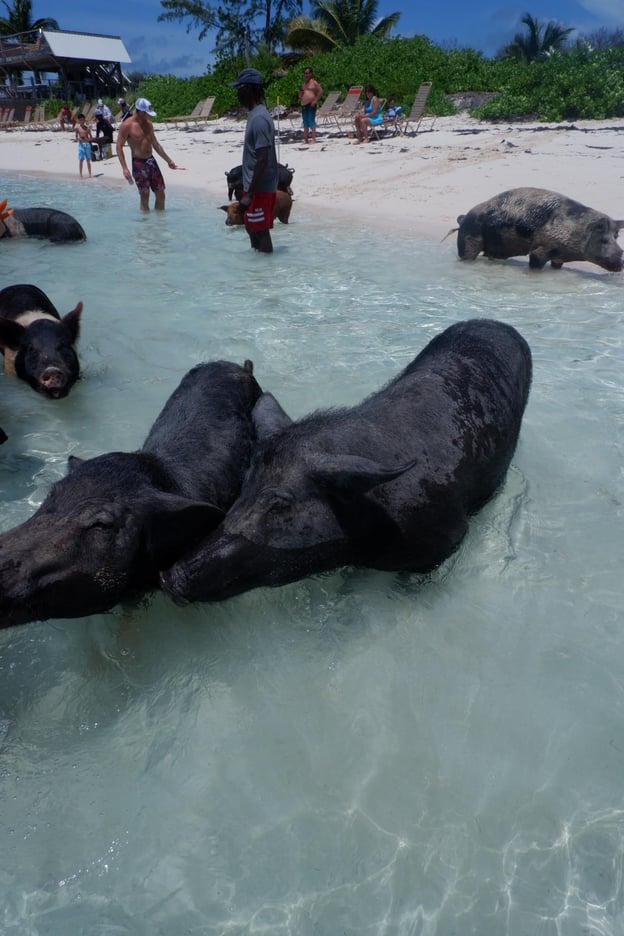
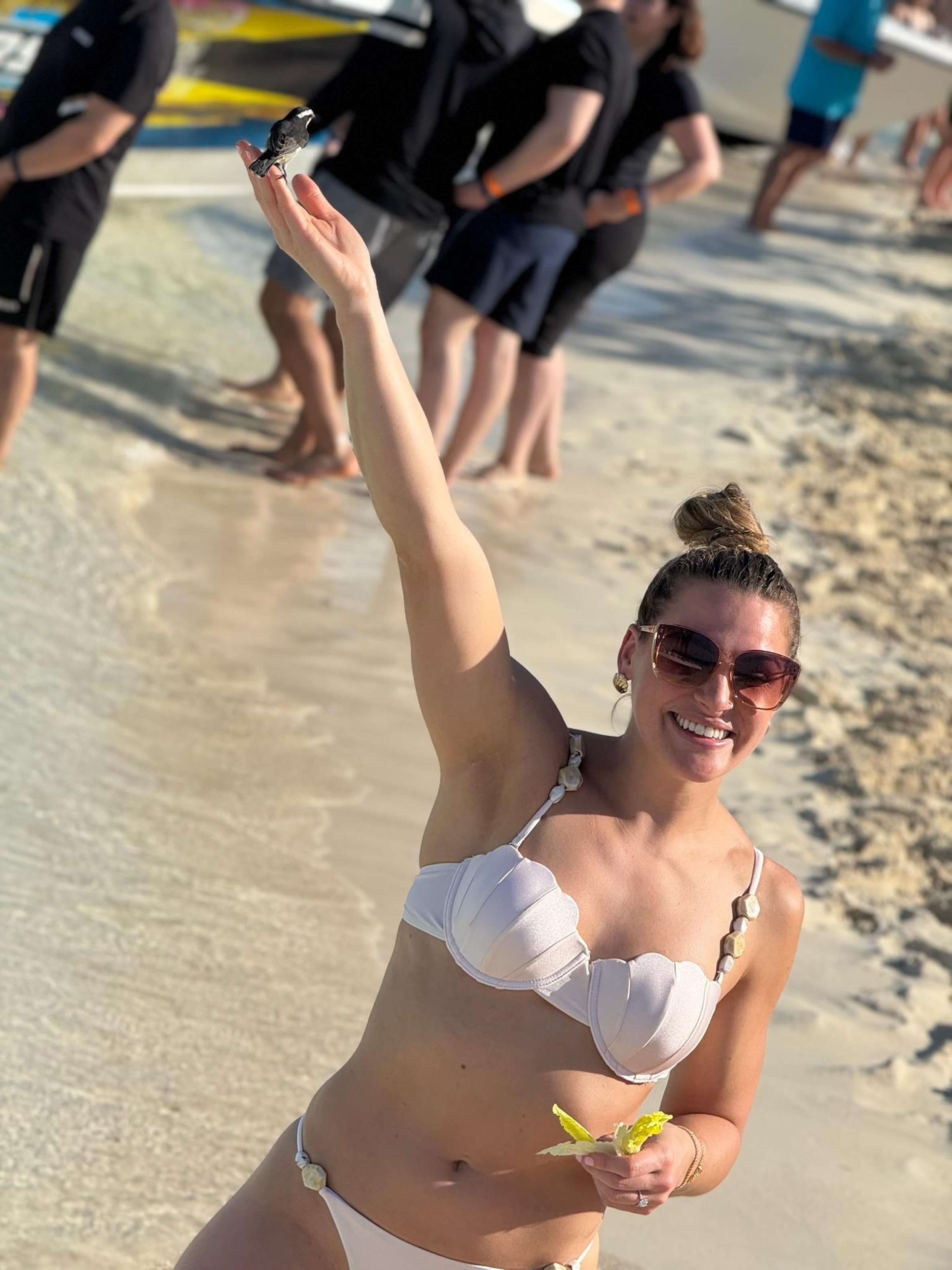
Engine noise carries across the shallows at Big Major Cay, and the pigs read it as dinner. Boats pull up off the beach and the animals wade and paddle out to meet them, heads up, snouts first.
That is the moment the videos never quite capture: half a dozen pigs swimming toward you through clear turquoise water, fully expecting to be fed.
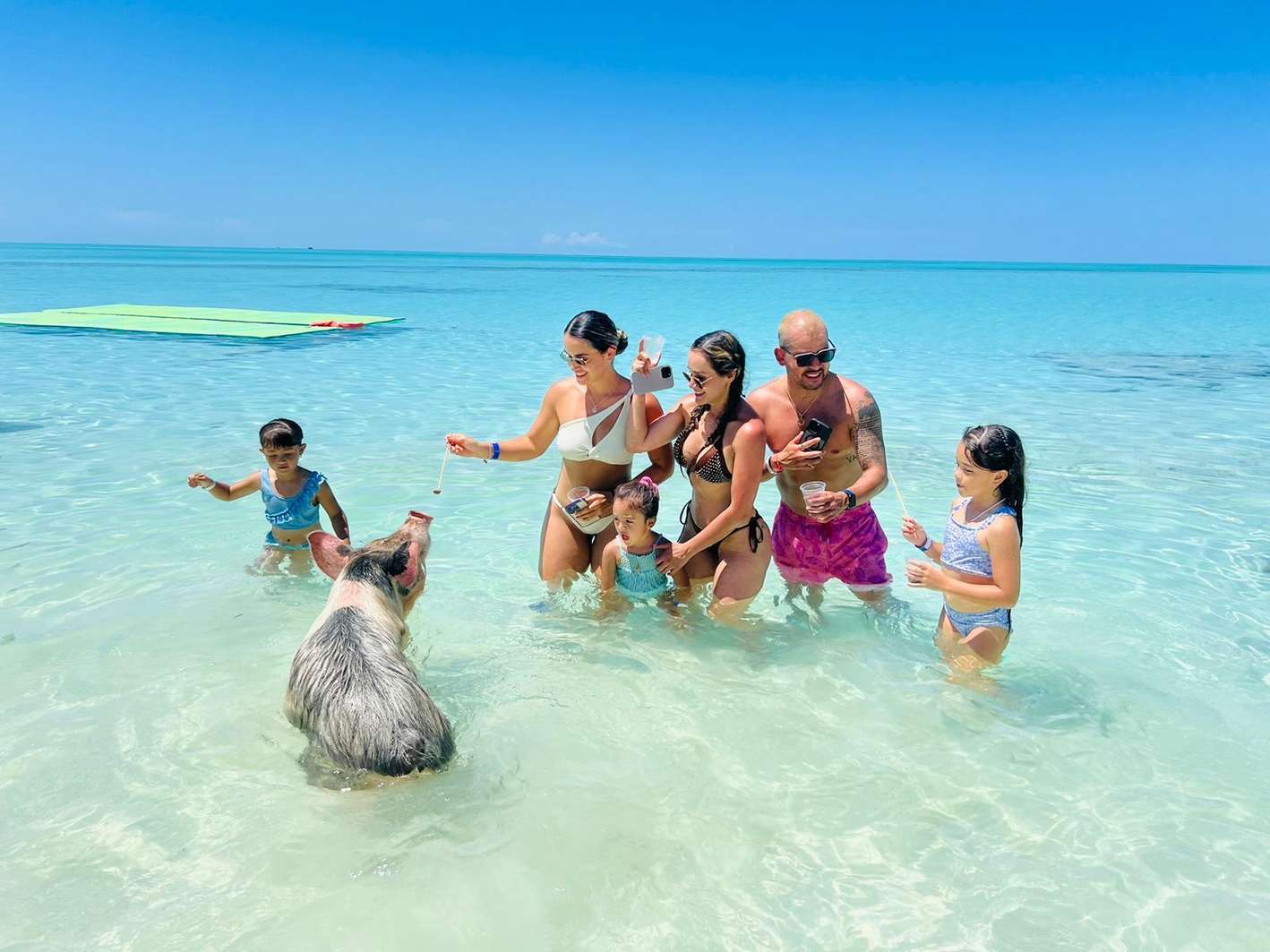
So can you swim with the pigs? Yes, with one honest clarification. Most of the encounter happens standing in knee- to waist-deep water or on dry sand, feeding and photographing the pigs as they come looking for snacks.
The animals do their swimming out by the boats, and you meet them in the shallows. You can stay on the boat entirely and still see everything, though almost nobody does.
Nobody knows for certain how the pigs arrived. One legend says sailors left them planning to return and cook them. Another has them swimming ashore from a wreck.
The account Exuma residents themselves tell is that Wade Nixon and Don Rolle brought the first animals over in the 1990s to start a pig farm for food.
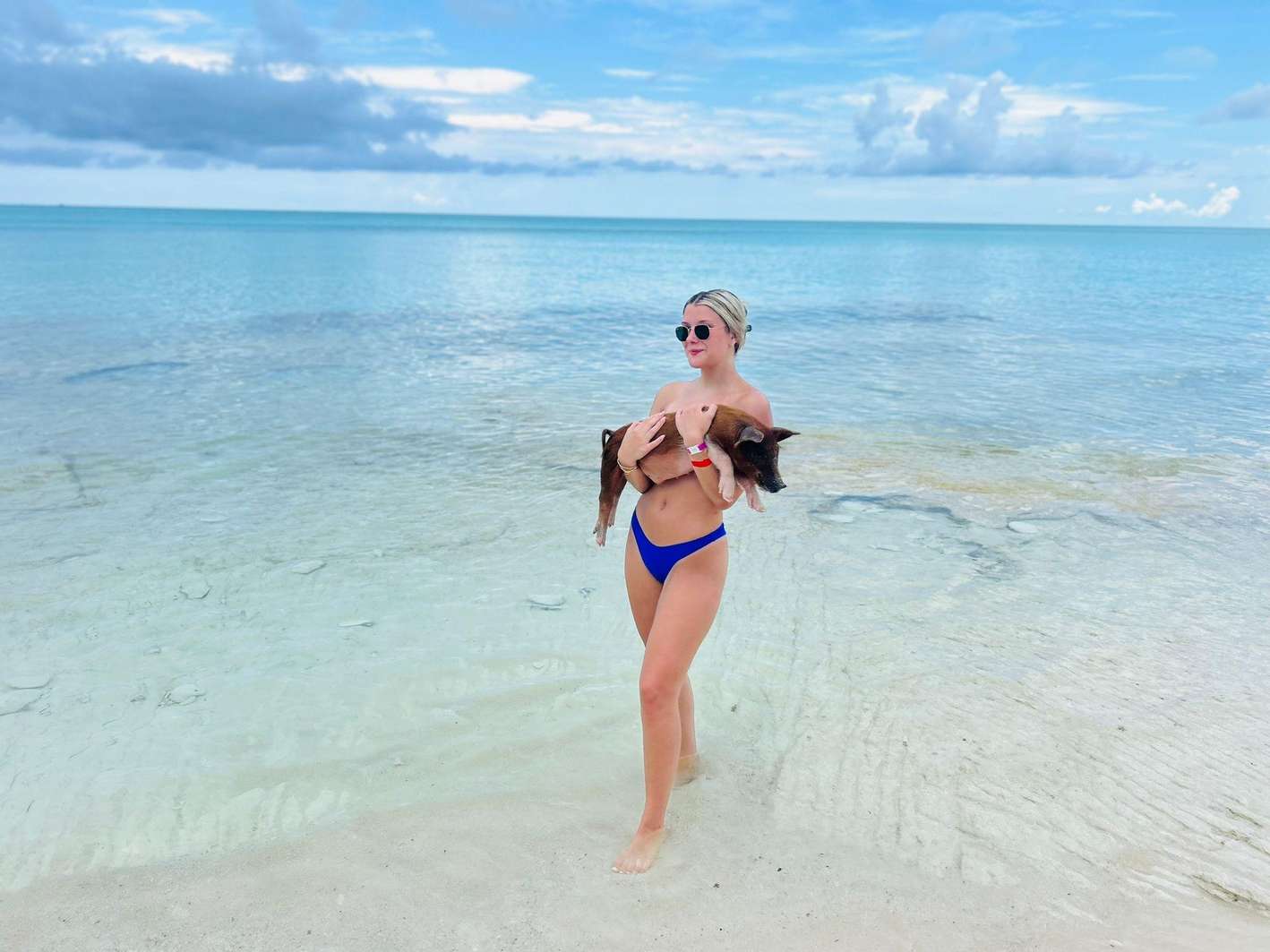
One line worth knowing before you go: these are feral animals, free-roaming and self-feeding. Visitors are allowed to carry the pigs for photos, but piglets are off limits, because a squealing piglet brings an angry mother sow in seconds.
They are semiferal animals that swim out to boats purely because they have learned that engine noise means food.
The encounter happens in knee- to waist-deep shallows or on dry sand, where the pigs come to you.
Nobody does. The shipwreck, the sailors and the 1990s pig farm are all competing stories, and the last one is the one residents tell themselves.
Settle those expectations early and the day works: you wade in, you feed from an open hand, and the pigs do the swimming.
The pigs on Big Major Cay are the ones that went around the world, and they are the only original wild colony in the Bahamas.
The island is uninhabited, there are no hotels on it, and the animals live free on the beach and in the water, about two dozen of them. That is the difference between this and everything sold under the same name elsewhere.
Rose Island near Nassau runs a smaller, managed commercial operation on a private islet built for tourist encounters. Imitator beaches also exist off Rolleville near Great Exuma, and on Spanish Wells, Great Stirrup Cay and Long Island.
Those trips are shorter and closer, half-day outings, while the original Pig Beach lies roughly 55 to 90 miles from Nassau and takes a full day to reach.
Here is where first-timers lose money and a day: not every tour marketed as a swimming pigs trip goes to Big Major Cay. Some go to the closer managed colonies.
Most people searching for the famous pigs want that original herd, so check that the itinerary names Big Major Cay or Pig Beach before you book.
The wild colony also behaves differently. These pigs paddle out to approaching boats on their own, roam the whole beach and sleep where they like. A managed herd waits at a feeding station. Both make a pleasant morning. Only one is the story you have seen online.
The practical geography behind all of this, and the boat times from both Nassau and Great Exuma, sit in the guide to where the swimming pigs are located in the Exuma Cays.
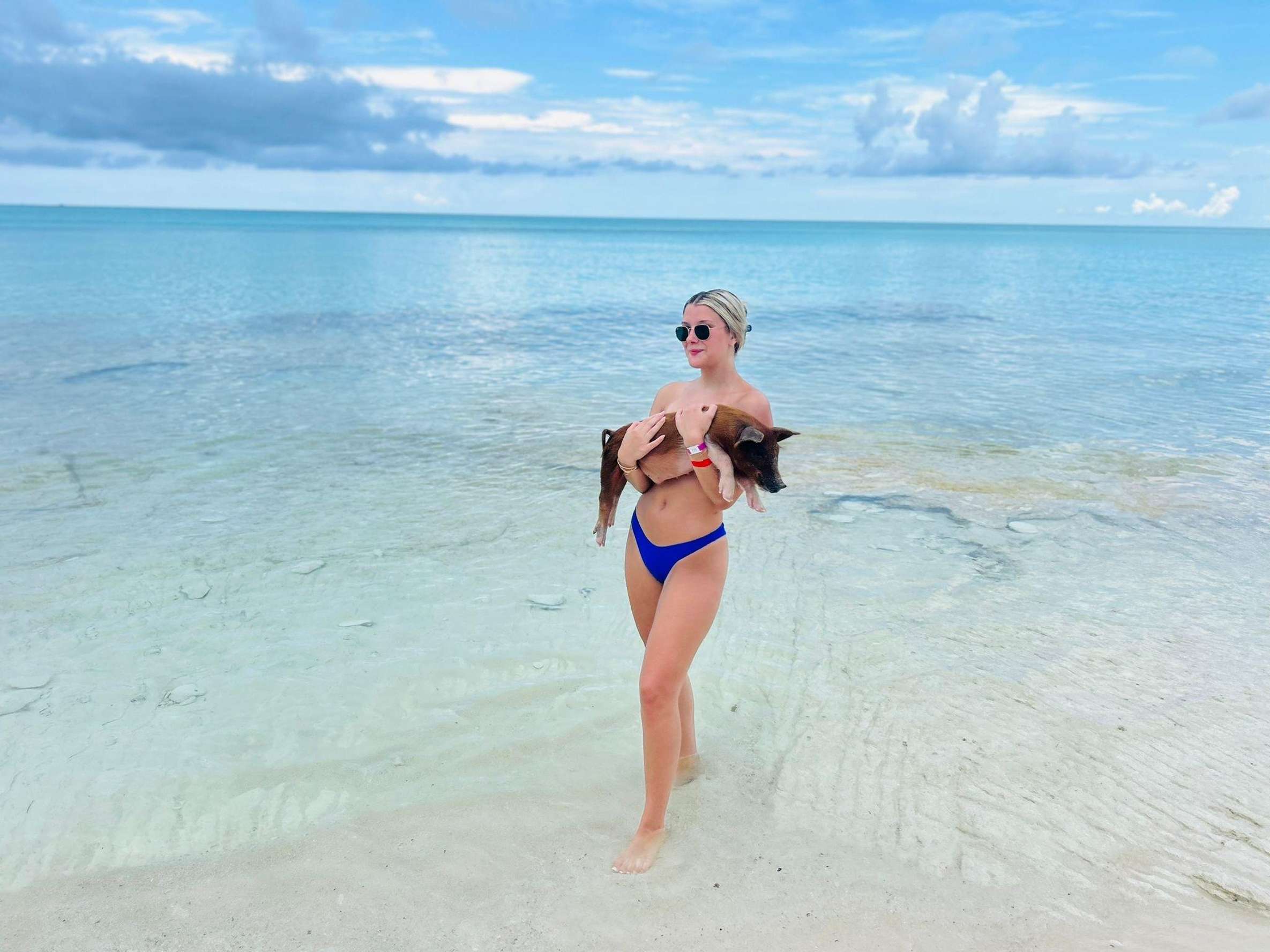
Start with the fact that reshapes every plan: Big Major Cay is accessible exclusively by boat. No bridge, no ferry terminal, no road on the island at all.
And the swimming pigs do not exist on the mainland beaches of Great Exuma or Little Exuma, so no amount of walking along a resort shoreline gets you there.
Two routes work. The powerboat run from Nassau crosses open Atlantic water and takes one to three hours each way, with the fastest boats covering it in about two on a calm morning.
It is a full-day commitment either way, and most organized tours handle the crossing for you. From Great Exuma, the run north takes about an hour and a half from Barraterre Dock.
The third option is a charter flight to Staniel Cay, which sits right around the bend from Big Major Cay and cuts the travel time dramatically.
The route you pick depends on where you sleep, and the full comparison of crossing times and departure points is in the location guide to Big Major Cay in the Exuma Cays.
You can also arrive under your own power if you have chartered a vessel, though rental boats from George Town stay restricted inside Elizabeth Harbour and cannot make the northern run.
For almost everyone, the honest choice is a booked tour: the navigation, the shallow-water landing and the timing are handled, and the day still runs eight hours or more.
The pigs are docile by the Ministry of Tourism's own description, and most visits pass without a nip. The incidents that do happen follow one pattern: food handled carelessly. Every rule that matters comes down to where your hands are.
The big one: never stand in shallow water holding food openly in your hand. A full-grown pig chasing a snack will charge, knock you over or bite, and those bites are serious puncture wounds that need medical attention.
Feed from an open, flat hand or drop food in the water, skip scattering it on the sand, and follow whatever your guide tells you about feeding.
Empty hands matter too. Raise them in the air where the pigs can see them, and they quickly turn and walk away. Keep them visible and gently push an approaching pig aside if you want it to move on.
A few habits worth carrying onto the sand. Do not tease or withhold food once a pig has come over, because frustrated pigs get pushy and nip.
Do not corner or crowd animals that are resting or feeding. Skip bare midriffs, since a careless approach can catch skin. And leave every piglet alone, because their squeals bring protective sows fast.
Signage on the island repeats the rules and lists approved foods: fruits, vegetables, bread and the local pig feed sold there.
Standing in shallow water with food in an open hand Feed in the water or from an open flat hand, and keep empty hands raised and visible so pigs turn away.
With your hands sorted, the pigs stay calm and the stay stays fun. People who ignore the hand rule are the ones who come home with a story about a bite.
The pigs run on a simple schedule built around food, and it rewards early arrivals. In the early morning they are hungry and active, and they swim out eagerly to any boat that appears.
By midday, after a morning of tour groups feeding them, they are full, sleepy and far more interested in lounging in the shade than in paddling anywhere.
The timing window matters more than it sounds. A group that reaches the beach before 11 am meets pigs that swim out and compete for attention. The same group arriving after lunch finds animals dozing on the sand, and the photos show a napping beach while the encounter everyone came for never quite starts.
Pigs are hungry, active, and paddle out to boats.
Full from earlier feedings, pigs rest in the shade.
Pigs are sleepy and reluctant to swim.
The full-day tours from Nassau work around this by leaving early and putting the pig stop in the morning hours, before the heat and the midday boat traffic build. If you are choosing between departure options, favor the one that reaches Big Major Cay first.
Keep the expectation honest, as people who have done it like to say: the experience is mostly wading in waist-deep water or standing on the sand while the animals come to you looking for snacks.
The welfare question gets a solid answer. The Big Major Cay pigs are cared for daily by local caretakers and the tour operators that visit, who bring food and fresh water.
Water tanks and a guttering system supply the animals, and volunteers have stored fresh water in three 150-gallon drums in the center of the island. A veterinarian from Nassau treats sick pigs in separate pens built for animals needing care.
The hygiene picture asks for a few habits of your own. Pigs relieve themselves directly into the shallow shorebreak, and droppings end up on the sand and in the water. That is the reality of sharing a wild island with two dozen animals, and it does not spoil the visit if you handle it sensibly.
Three rules carry you through. Do not swallow the water. Do not submerge your face, mouth or eyes in the murky shallows near the beach while feeding. And stay out of the ocean entirely if you have open cuts, scrapes or fresh wounds, because warm saltwater and animal waste carry real infection risks.
None of it complicates the visit. Most of the encounter happens standing in water to your waist with your head up, which is exactly where you should be anyway.
Children can meet the pigs, and many do, but the beach asks for closer supervision than a typical resort swim. Around food they get pushy, bump into swimmers and have been known to try climbing into boats.
The practical setup: keep children within arm's reach in the water and on the sand, keep them in the shallows, and let the pigs approach the child rather than the other way around. Small children should not hold food near their bodies.
Every child who needs one wears a life vest or flotation aid. At the nurse shark stop later in the day, the same rule holds, children within arm's reach. Age rules are set tour by tour, and they vary.
Some operators permit babies from age one, others draw the line at two, and a handful enforce higher minimums on open-water runs. Since a minimum age can stop the trip at the dock, confirm your operator's rule before booking if you travel with a baby or toddler.
Two honest notes for parents. The open-water crossings and the long, hot, bathroom-free day suit older children far better than toddlers, and some young kids simply do not enjoy it. And a structured, trainer-supervised pig encounter on a private island facility can be the calmer choice for families with very small children.
Run that comparison against your own group before you book, and the right trip picks itself: confident older kids thrive on the full-day run, while families with toddlers often do better with a calmer encounter.
Clear the calendar. A full-day Exuma island-hopping tour runs about eight to eight and a half hours door to dock, with standard departures around 8:30 am and return by 5 pm. That is a whole day of your trip, and worth planning the day after lightly, because the sun and the spray add up.
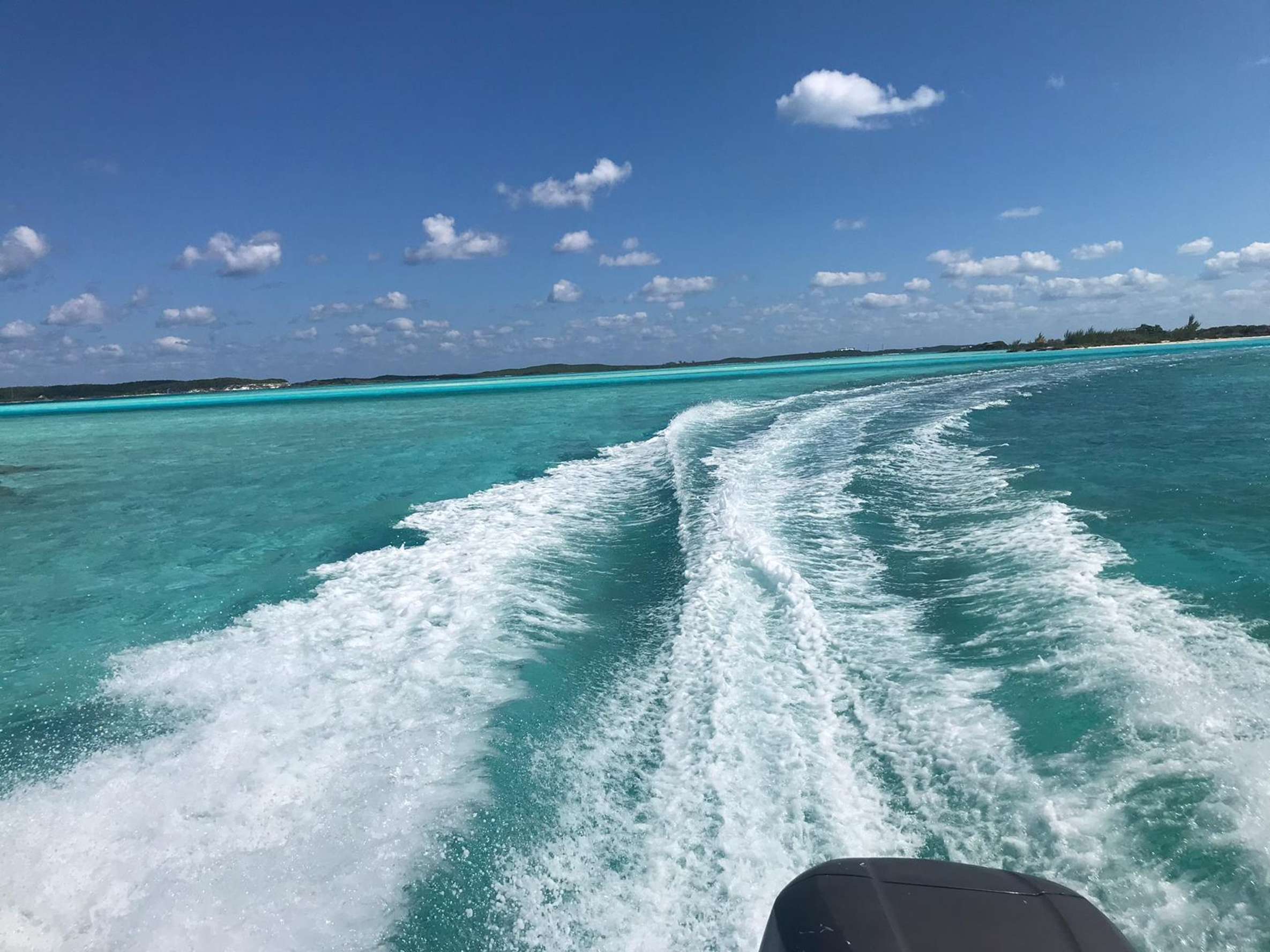
The crossing is the part to respect. From Nassau, the open-water speedboat run spans one to three hours each way across open Atlantic, frequently rough and bumpy and exposed to wind and spray.
When sustained winds climb above roughly 20 knots, the route builds steep three- to five-foot chop and captains routinely cancel or reschedule. Seas run calmest from May through September; from October through March, windy days become a regular feature of the month.
That weather dependency is why veteran captains give one piece of advice that visitors ignore at their cost: book the excursion for the first available day of your vacation, so a washed-out morning can be moved to any later day of your stay.
The same trip scheduled on your final day leaves no room, and a windy morning means the pigs never happen.
For the crossing itself, one of the established full-day runs such as the Exuma Powerboat Tour from Nassau with Swimming Pigs handles the navigation and keeps you fed on the way, which is easier than improvising the route yourself.
| Check | Why it matters | Our pick |
|---|---|---|
| When to book | A windy forecast can cancel the crossing outright | Book the first available day of your vacation as a weather buffer |
| How the crossing feels | One to three hours of open Atlantic each way | Pick a fast powerboat tour that gets you across quickly |
| What a cancellation costs you | Tours are strictly weather-dependent | Operators reschedule or refund, so early booking protects the whole week |
| Where to start from | The pigs sit far offshore, not on any mainland beach | Match the departure island to where you sleep |
Weigh those four checks against your own dates and hotel, and the booking takes five minutes instead of a week of second-guessing.
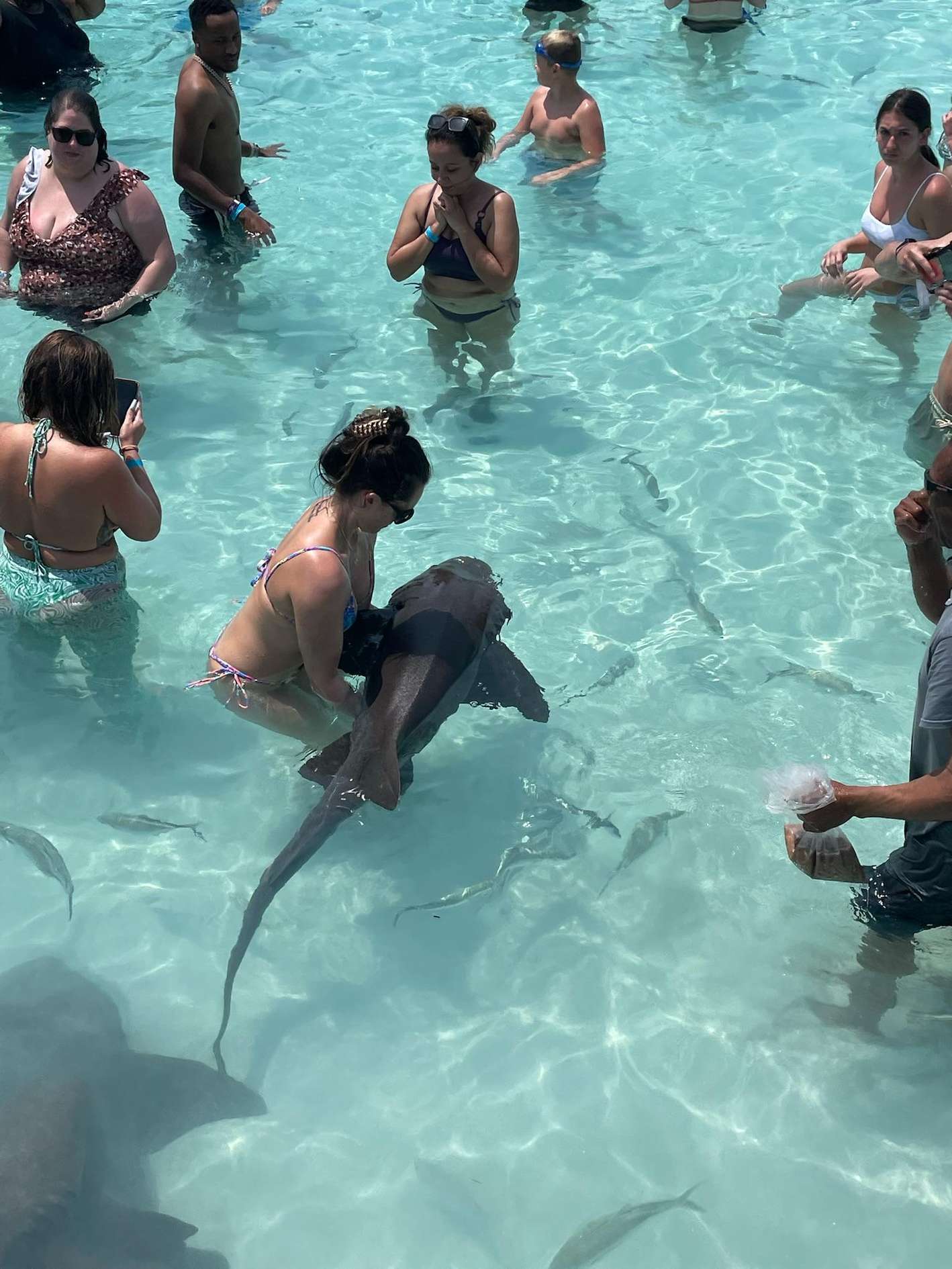
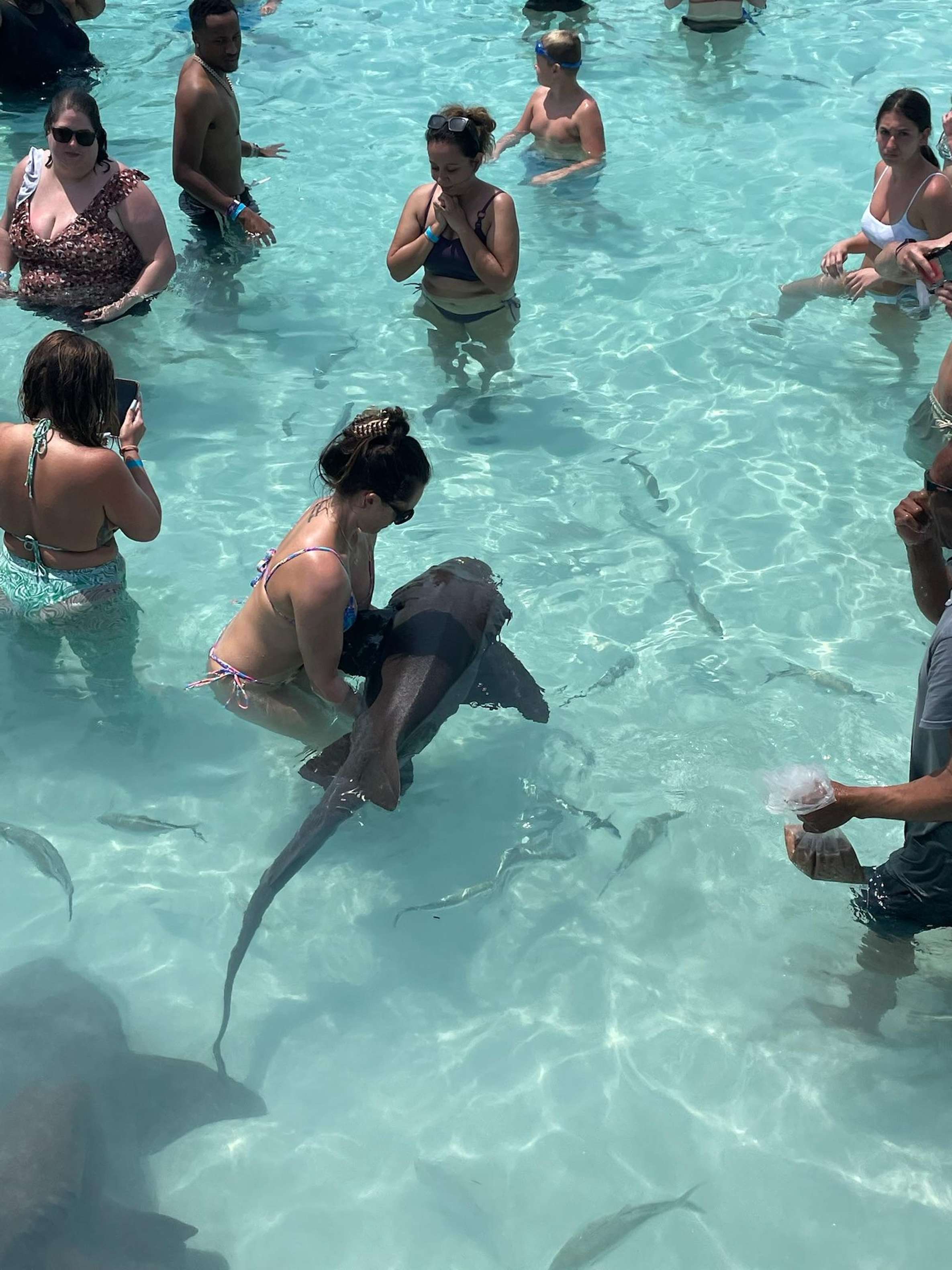
A day trip to the northern cays rarely stops at the pigs alone, and the extra stops are half the reason the long crossing earns its keep. Nurse sharks gather at Compass Cay Marina, where you can slip into the water with them or watch from the dock.
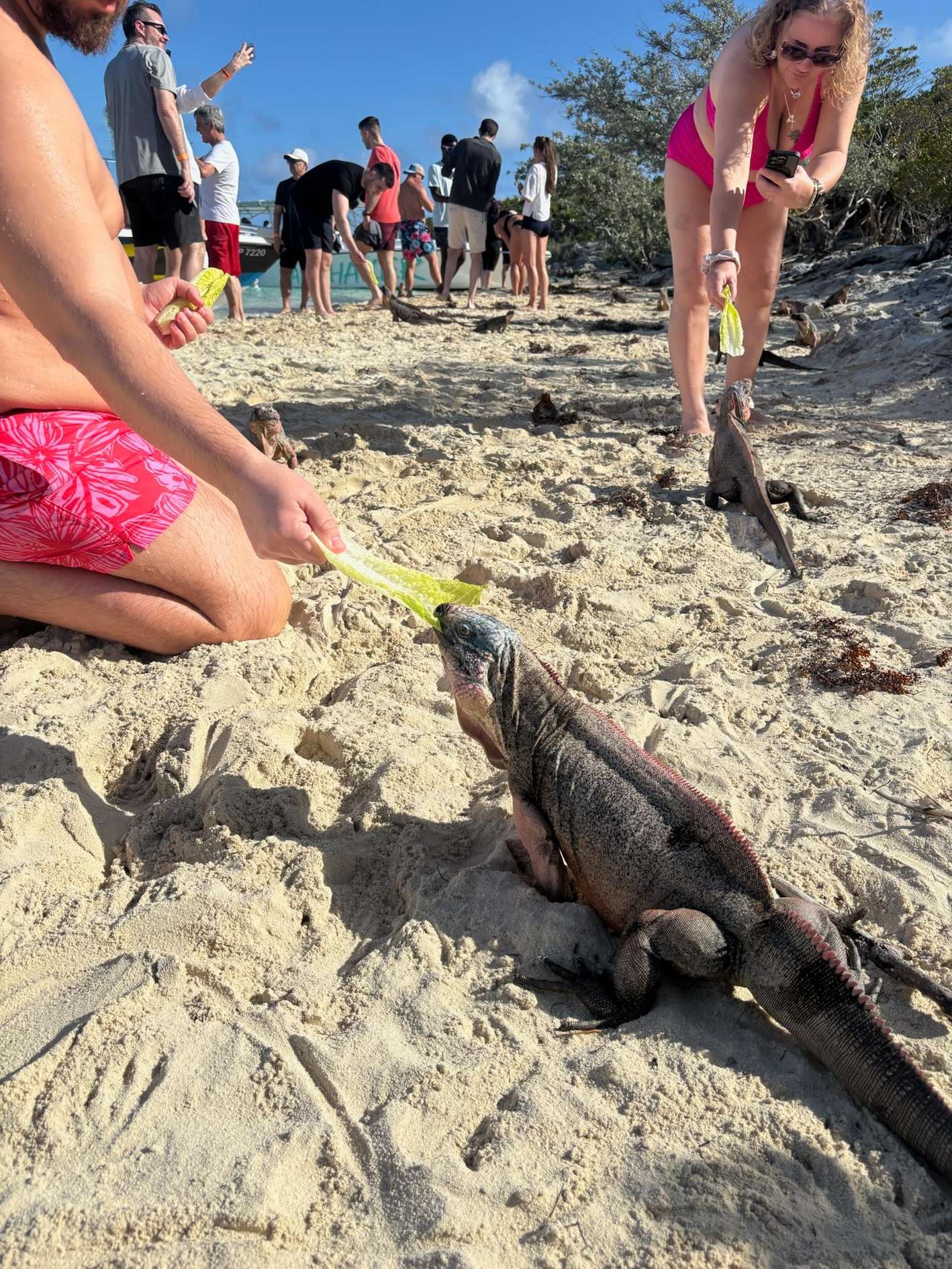
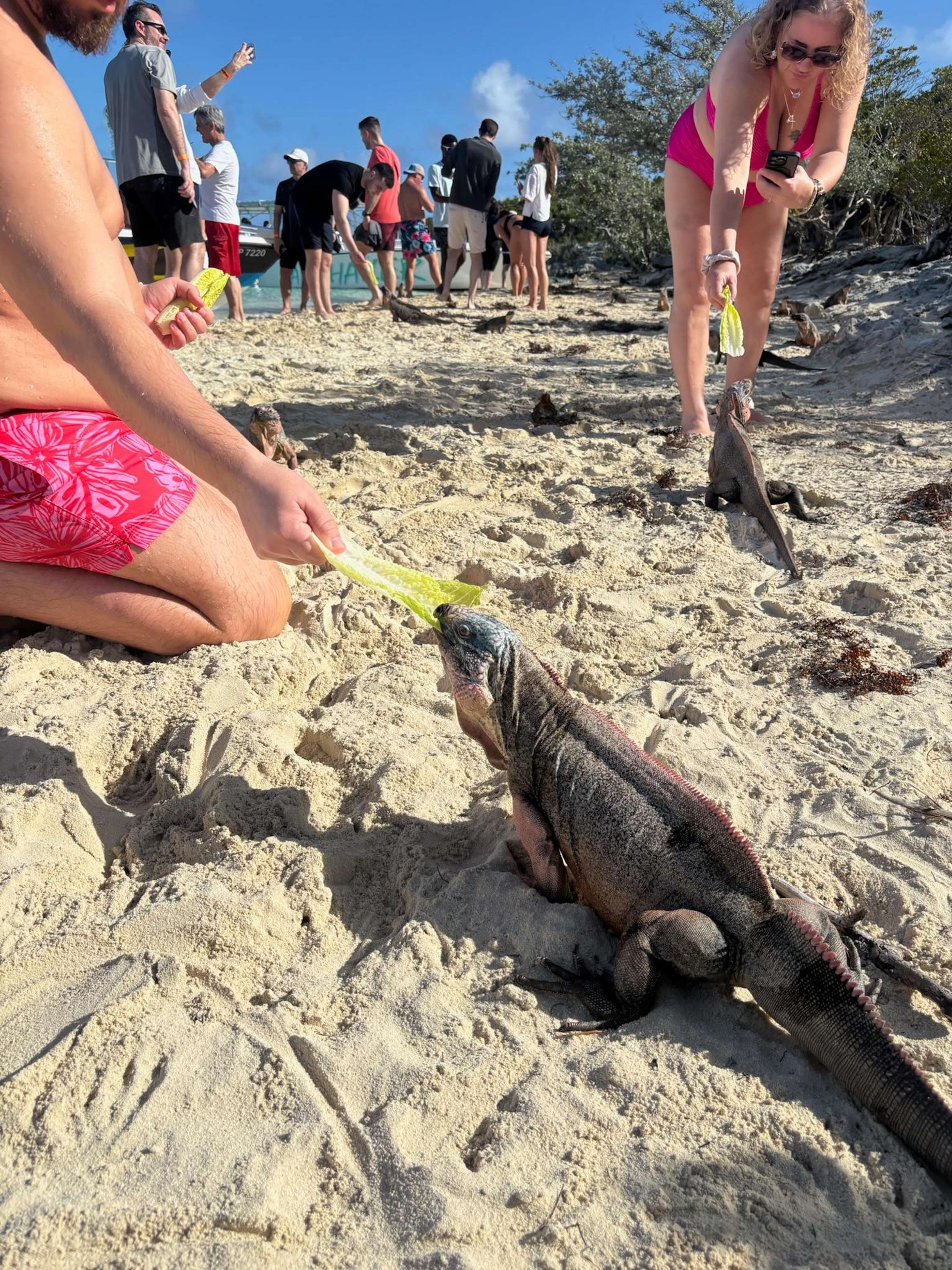
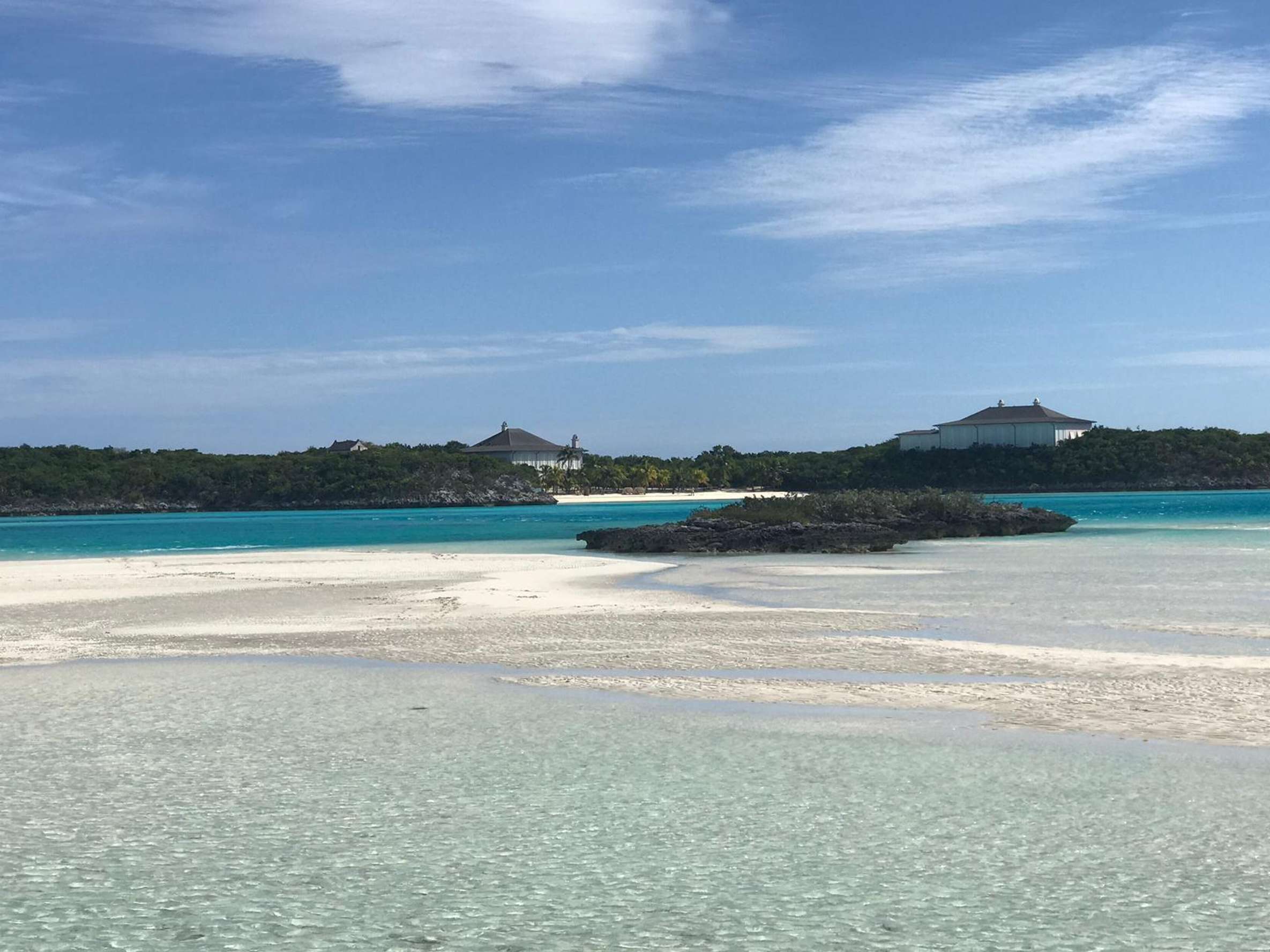
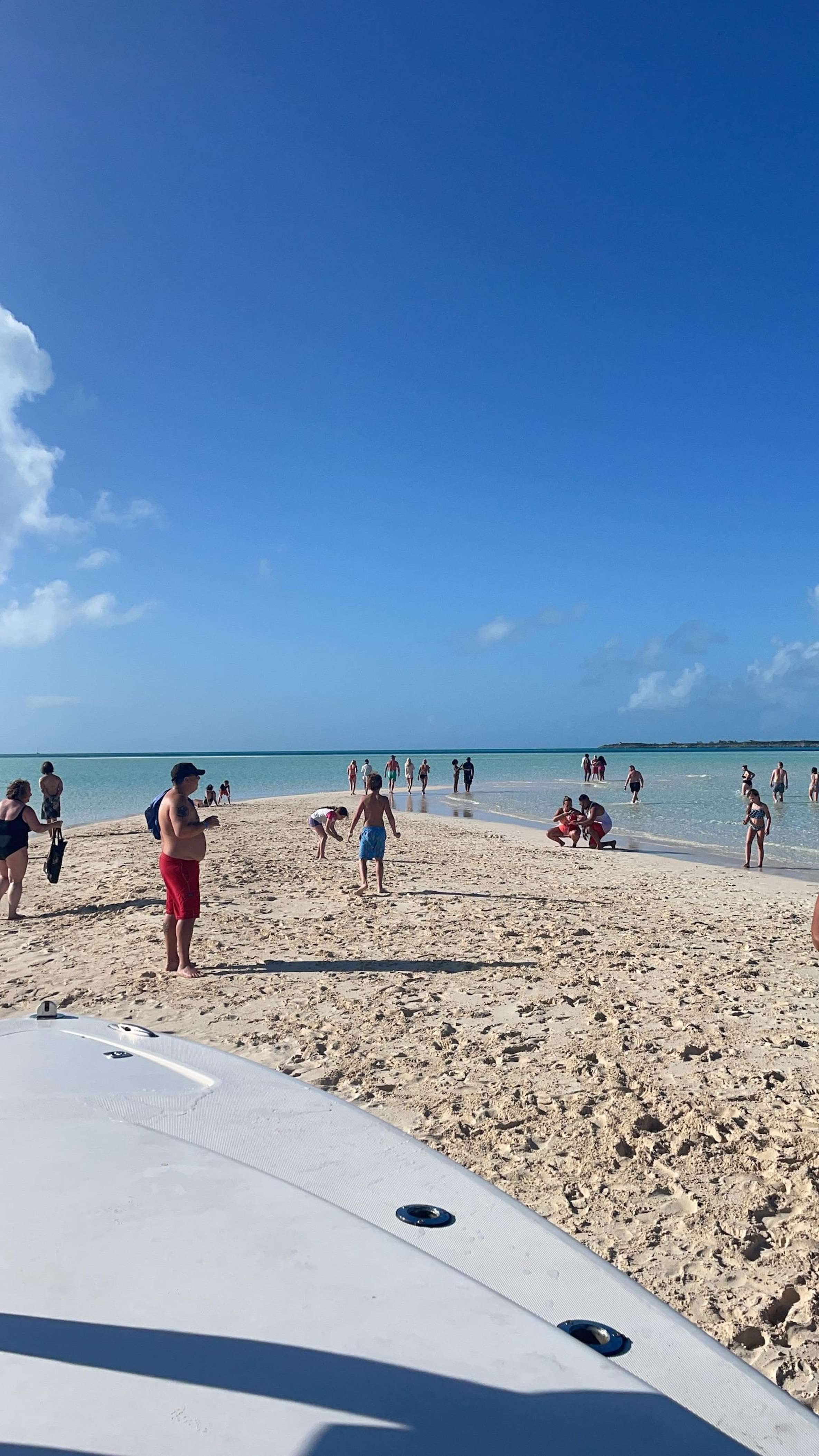
Wild Bahamian rock iguanas, an endangered species, roam their own island at Allen's Cay. Itineraries also regularly add sandbars, sea turtle habitats and the sunken plane wreck that sits in shallow water along the way.
The iguanas earn a special word. Travelers who have done the full circuit often call them the more impressive wildlife encounter of the day, which surprises people who booked for the pigs alone.
At Compass Cay, the briefing comes before the water: do not step on, grab or chase the sharks, make no sudden movements, give resting sharks their space and let any approaching shark decide about contact. The crew handles the feeding themselves, and visitors never hand-feed. Keep children within arm's reach here too.
The way to use all of this: if you are taking a tour out to the Exuma Cays anyway, make sure it includes the iguanas, the sharks and the sandbars, because the crossing is the long part and these stops make it worthwhile.
The crossing to the Exumas is a high-speed open-boat run, and it generates two steady enemies: ocean spray that finds every bag, and sun reflected off white sand and shallow water from both directions. Packing answers both.
A heavy-duty roll-top dry bag, 20 to 30 liters, keeps cameras, phones, dry clothing and cash safe across hours of spray. A floating waterproof pouch on a neck or wrist lanyard covers anything you want on your body, so electronics that go overboard stay recoverable.
For the sun: broad-spectrum mineral sunscreen at SPF 50 or higher, a long-sleeve UPF 50 rash guard or quick-dry shirt, a broad-brim hat and polarized sunglasses. Reapply through the day, because reflected UV on the water burns faster than most visitors expect.
The weather threshold worth knowing sits behind every departure: Bahamian authorities issue a Small Craft Advisory when sustained winds reach 15 to 25 knots and seas build to 5 to 8 feet, and captains cancel the Nassau crossings when winds push past roughly 20 knots and steep three- to five-foot chop sets in.
| If this happens | What happens then |
|---|---|
| Winds exceed about 20 knots and the chop builds | The captain cancels or reschedules the crossing before departure |
| A tour is canceled for weather or a critical change | You get a full refund automatically |
| You cancel yourself | Full refund applies up to 24 hours before departure on the featured tours |
Know that sequence and a weather cancellation becomes an inconvenience instead of a lost day: the operator moves you or returns your money, and your dry bag keeps the rest of the trip intact.
The boat docks by 5 pm, you are salt-crusted and sun-tired, and Nassau is exactly the right place to land afterward. Downtown is walkable, with historic side streets, galleries and cafes running off Bay Street, and the evening options split between easy local eating and the resort strip on Paradise Island.
For local flavor, head to Arawak Cay, known everywhere as the Fish Fry, a stretch of brightly painted shacks serving Bahamian cooking and seafood after dark.
On Paradise Island, Marina Village makes an easy evening stroll with its colourful buildings and marina backdrop, and McKenzie's Conch Shack covers dinner. The Dilly Club there pours coffee by day and craft cocktails by night.
If the evening should feel bigger, Atlantis runs a full spread: Bimini Road serves Caribbean plates and conch salad from 5 pm to 10 pm, Moon Bar overlooks the casino floor, and Bar Sol hosts live music.
Graycliff, a historic mansion on West Hill Street downtown, serves dinner from 6 pm to 10 pm for the long-table version of the night.
Arawak Cay's painted shacks serve the food Bahamians actually eat, at a friendlier tab than hotel dining
It is a short stroll with food on site, no planning required
A day that starts at 8 am ends early, so keep the first night flexible
Pick one of those and the day closes well: a plate of conch at the Fish Fry or a slow walk through Marina Village is usually all a salt-and-sun body wants.
The last decision is timing, and it is the one people who run these waters feel strongly about.
The open-water crossing is weather-dependent in a way that sheltered excursions never are: from October through December, choppy days land on roughly one in eight, and March and December each bring around four genuinely windy days a month. Winter cold fronts also swing the wind around and stir up the shallows.
The fix costs nothing. Schedule the tour for the first available day of your stay, so a washed-out morning can be rescheduled onto any later day of the trip rather than ending the plan entirely. Travelers who push the pigs to their final day accept that one windy forecast cancels the whole reason they booked.
The season matters alongside the day. May through September brings the calmest and clearest water, with calm seas nearly every day. Late spring, April into May, is a sweet spot for snorkeling visibility as the winter fronts fade. Summer flattens the sea almost completely, trading glassy water for humidity and afternoon showers.
Take that advice the day you book and the weather stops being a risk you carry. The dates you control, the season you pick and the buffer you build decide how the whole story ends.
The original wild colony on Big Major Cay is worth a full day of any Bahamas trip, and the encounter is genuine: wild pigs that swim out to your boat because they have learned to expect food.
Book early in your stay, wade the shallows, keep food handling calm and the day delivers exactly the story you came for.
pigs swim out hungriest before 11 am
pigs go sleepy by midday, mornings are best
Short answers to what travelers ask most before booking a day with the swimming pigs.
 New Providence Island2026
You can. At Big Major Cay in the Exumas, the pigs paddle out to arriving boats because they associate engine noise with food. You can wade in waist-deep water beside them, or stay on dry sand and watch from there.
The original wild colony lives on Big Major Cay, an uninhabited island near Staniel Cay in the northern Exuma Cays, roughly 55 to 90 miles from Nassau. Other pig encounters, like the ones on Rose Island close to Nassau, are smaller managed operations on private islets.
Nobody knows for certain. One story says sailors left them planning to return and cook them, another that they swam ashore from a shipwreck. A family from nearby Staniel Cay says it brought pigs over in the early 1990s, and Exuma residents recall starting a pig farm there for food.
About 20 pigs and piglets live on Big Major Cay. They are semiferal, roaming the beach and the shallows of an island with no hotels and no residents.
Local caretakers and tour operators bring the pigs food and fresh water every day. A veterinarian from Nassau treats sick animals in separate pens built on the island, and volunteers keep water stored in large drums at its center.
The Bahamas Ministry of Tourism calls the pigs docile and urges visitors to interact responsibly.
Leave the piglets alone. A piglet's distress squeals bring a protective reaction from its mother, and sows can turn aggressive fast. You are allowed to carry the adult pigs for photos instead.
Follow your guide's feeding instructions and never stand in shallow water holding food in an open hand, because a hungry pig may charge or knock you over. Feed in the water or from a flat, open palm, and if you have no food, raise empty hands in the air so pigs turn away.
The pigs relieve themselves in the shallow shorebreak, so keep your head up and avoid swallowing water or submerging your face in murky spots. Stay out of the water if you have open cuts or scrapes, because animal waste and warm saltwater carry infection risks.
Most visitors wade in knee-to-waist-deep water or stand on the sand, and you can watch and photograph the pigs from the boat if you prefer to stay dry. Boarding does require climbing boat steps or a ladder, stepping into the water, and walking over shallow water and uneven sand.
Day trips through the cays regularly add nurse sharks at Compass Cay Marina, wild rock iguanas at Allen's Cay, sandbar stops and views of a sunken plane, with the pigs as the centerpiece of the day.
Most full-day trips pair Pig Beach with nurse sharks at Compass Cay Marina, iguanas on Allen's Cay, and stops at sandbars, a sunken plane, or sea turtle waters.

pigs swim out hungriest before 11 am
An 8-hour powerboat day from Nassau brings you to Pig Beach, the iguanas and the nurse sharks, with a hot lunch and free cancellation up to 24 hours before you go.